Interview: Chat with Keeth Apgar from The Harmonica Pocket

harmonicapocket.274

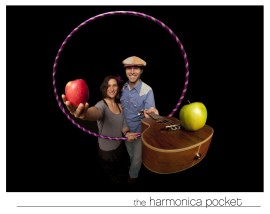
Keeth Apgar, front man, master songwriter and multi-instrumentalist for The Harmonica Pocket, is a deep thinker and highly talented songwriter. In addition to Keeth, The Harmonica Pocket features a regular group of folks, one of which includes partner Nala Walla, who delivers rich harmonic vocals throughout the album.

Last year, The Harmonica Pocket released their third full-length children’s album called Apple Apple. The recording of the album, as well as previous albums, took place in a solar powered studio on a tiny island in Puget Sound, Washington, where they live.

Prior to the release of Apple Apple, Keeth and Nala welcomed their first child into the world. As a result, many of the songs reflect the experiences and bond they have as a family while also celebrating the natural world that surrounds them on their little island.

Apple Apple is a beautiful album that will leave you feeling like someone just whispered a gentle lullaby in your ear. To learn more about Apple Apple take a peek at my review.

Intrigued by Keeth’s thoughtful songwriting and musicality, I was very happy to have the chance to talk with him about the album, his approach to songwriting, family life and apples.

KCG: Was music something that you always kind of enjoyed being involved with? Was there a particular path that led to where you are now, musically?

KA: Well, it wasn’t my path. My Dad was an athletic director at a public school district so we were really into sports as kids. Slowly, I was getting more and more interested in music and kept asking my parents to get me a guitar. So, they rented a guitar and got me some lessons where I learned basic stuff, like how to tune it, for example. Then, in high school, I just started playing and writing some songs. We’d come home from school and try to figure out guitar solos on a Metallica or Van Halen record and play along with them. But it wasn’t like I grew up in a family with jazz on the radio or Beatles records on. I really don’t know why it happened.

KCG: Maybe it was meant to be. How has music shaped or influenced you throughout the years?

KA: I definitely connect with it now and I really encourage parents and kids to embrace it, especially if a child is expressing an interest in [playing music] because it has given me such an anchor in my life. Through the good and the bad, [music] helps me process things that have happened in my life to this day. For example, if someone dies, a pet dies or if something beautiful happens, [music] provides a way to spend time with that [occurrence], focus on it and write about it, process it and help release it. So, it’s really a powerful thing for me, and that’s one reason why I like playing music with and for kids. I want to share and introduce that process to them.

KCG: Do you think your perspective has changed since your son, Montana, has come into your life?

KA: Most definitely. I had a job in a preschool around 2002. During that time, I was with kids of different ages, just getting to know them, figuring out how they think, what they talk about and stuff like that. I really enjoyed that work and that time with them. But, even though I thought that I really knew what it was like to hang with kids, having a kid of your own is such a different level because you know your child so much more deeply. You’re with them all the time; through the tears, through the poo, through the laughs.

I think that this album reflects some of that. Some of the songs on Apple Apple are informed by me having my first child. There’s a song called “Monkey Love,” which reflects how people, or monkeys in this case, come together and form a family. “Little Little Baby” is kind of an obvious example. Another one is “Reflections,” which I wrote while I was helping to get Montana to sleep one day. We were just walking and humming and I realized that being a parent is so intimate. Lots of kisses and hugs. It struck me deeply and I thought it was important to put that song onto a family album.

KCG: I think it’s interesting that you used Chris Ballew (Caspar Babypants) as Monkey 2. His voice complements the song very well.

KA: I was super psyched when Chris [Ballew] was up for singing on “Monkey Love.” I thought he was the perfect monkey to be in our “family.” Chris has become a friend and I really like what he does a lot. He’s a great guy and he works so hard. I’ve been wanting to do something with him for a while.

KCG: We are big fans of Chris’s music as well. On “Monkey Love,” the harmonies between the 3 singers add alot of depth to the song. It really brings the monkey family to life.

KA: I really like vocal harmony, too. That’s something that really excites me. It’s kind of a mystery. I studied music theory and I technically know how it all works, but then you step back and take away all the literacy and nomenclature, and the way we describe it in the western world and go “Wow, why do voices pull against each other in this pleasing way when you create vocal harmonies?” It just blows me away! As a result, all of my records are full of vocal harmony. In the case of “Monkey Love,” I played with 3 different singers, singing harmonies, as opposed to myself singing most of the harmonies.

KCG: I also noticed that when Monkey 1 and Monkey 2 are introduced, they are accompanied by the sounds or sticks banging, and then when Nala comes in (as Monkey 3), and you all become a family, the background changes and there are accents like the sounds of crashing cymbals in celebration of this coming together. Was that arrangement intentional? Do you use instruments as a way to accentuate a song, or as additional “voices” in some ways.
harmonicapocket.114

KA: Yeah, definitely. There’s all kinds of different approaches to producing a song. Something I really love to do is have a dynamic build, giving the song a sense of growing. Maybe beginning small with simpler sounds and simpler productions, generally having less elements going on, and then slowly introducing things one by one. The song, “AppleApple,” is a good example of that, or “Afraid of Heights,” where things start very simply, melodies are introduced and then it starts to build, and, in the case of “Apple Apple,” turn into a drunken circus where there’s kind of a lot going on and laughter. So that building is something that I really love to do in producing the songs.

Another layer that I like is the twist. I really like to have some character development in some of my songs. Again, “Afraid of Heights,” is an example of that or “Waiting Always Takes a Long Time,” where you have this character, and sometimes it’s me or there’s this little birdie in a tree, and things start happening. Maybe there’s a conflict or there’s some trouble there and something happens in the song where it’s used to change the perspective. The turning point of the song, what I call the bridge, is where something happens, and when you get to the other side of the bridge, you go back to the chorus or the repeating line and [the song] means something a little bit different now. So, in “Afraid of Heights,” when the bird is born and she’s in her nest, she looks down and thinks, “Oh my goodness I’m so high up, this is terrible!” Then, suddenly, she looks up and sees the sky for the first time and realizes “Oh, the possibilities!” And it’s then that she opens up her wings, flies into the sky and exhales. The timing for the song “Afraid of Heights,” is in 4/4, where you’re counting up to 4. For the bridge, the song goes into 3/4 time just to demonstrate that something new is happening, and it’s really subtle.

KCG: There’s a personification element with some of the subjects in the songs on Apple Apple. But, I think that taps into the imagination of a younger audience. I spend hours sometimes just being a puppeteer or making any inanimate object talk and immediately, my daughter feels comfortable and excited to explore in this type of play.

KA: I think that comes from just being around kids. Just like you said, and from what I’ve observed, that’s how they play. The song that comes to mind on Apple Apple is “Apple Eyes.” There is an apple tree in our yard that drops so many apples in the Fall and they are so delicious. Every morning, Montana and I would go out and bring a basket with us to the tree. We shook the tree and picked up any apples that had fallen overnight, and we just talked to this tree. We said “Hi” to the tree and a lot of other things. I realized, in doing that, it was really creating an awareness of the natural world for him. That this tree, for example, is a part of our little neighborhood community; it’s a part of our family, in a way. To look at a tree that way is very different from just going, “Oh, I’m gonna go out and this tree is just dropping all these really great apples, and we’ll go steal them and bake pies and share them with our friends.” It’s just a different way of looking at the world. It was a discovery for me to start personifying things in my daily life and just seeing the relationship that can develop.

With this song, “Apple Eyes,” all this stuff that I was just describing, all came after that song. That song just kind of happened. A couple of lines came from that song, simple little melodies and I realized that I didn’t know where the song was going and I didn’t really care. It was that discovery. So, I made the apples’ eyes close and things like that. And, that’s an example of a song that’s not super linear, you know. You don’t need to track the song from the first verse, sequentially, to the bridge and beyond. It’s just a gentle lullaby-ish song where the images come and they go and they don’t mean any one clear thing, necessarily, which is where that song is hopefully helping its little listener.

KCG: There’s about 5 songs, roughly, at the end of your album that are like lullabies. They’re just really soft and gentle, like a little treat for small (and big) ears.

KA: On Ladybug One, I wrote a little letter and coded that in the CD artwork. The letter says “Put on track 10,” and from then on, it’s kind of a lullaby where it gets gentle and mellows out. I did that again with Apple Apple. I think it’s nice to have [lullabies] as a possibility on a kids’ album. It’s cool that you discovered that because I didn’t explicitly say that in the CD artwork this time around.

KCG: Going back to Ladybug One and looking at Apple Apple it would seem that there are themes. Do you do that intentionally? On Apple Apple, there are a lot of apple references, whereas Ladybug One has a bunch of songs about bugs. When you write, do themes help shape where you want things to go? What is your approach when thinking about creating a record?

KA: Well, I start writing songs, they begin assembling and I make lists. My life is full of lists. The particular lists I’m referring to are a list of songs and little stars or a little line that means this or that. The lists could include songs that I really want to do, songs that I’m not sure how to do, or songs that might need more development. Slowly, it becomes organized into some songs that I start recording and eventually a title just pops up.

What I was trying to do with the song, “Apple Apple,” and really why I liked that title, is because an apple is a very iconic kid noun. It was one of Montana’s first 25 words. Even though it has a couple of syllables and it’s not very easy to say, he really worked very hard on it. It’s also very iconic for the region I live in North America, and really in North America, in general, apples can be a local food which is another subtle part of our message; eating healthy and locally. So, I chose that over say, a banana, which doesn’t grow as commercially, as far as I know, anywhere in the continental United States. The last [reason] that I just want to mention is that saying [apple] twice, as in “Apple Apple,” refers to this album being my second big family album, and it’s kind of a way of tracking that. So, those are a couple of little reasons for having an apple in the title. I don’t know if I’ll stick with that and do something in three’s for the third album. It will be really subtle if I do.

So, I came up with the album title and obviously there was the song, “Apple Apple,” but I wanted to have a few more references to apples on the album and so you have the song, “Bare Feet,” which is about climbing an apple tree. I almost changed the line in “Supermoon” to the moon being tangled on an apple branch, but I thought that maple was just as iconic [as apple], and kids would have more of an experience with a maple tree as opposed to an apple tree. But, I thought about it for a while and didn’t think it was that important. So, I had two songs, “Bare Feet” and “Apple Apple,” and was thinking maybe I can find more references [to apples], and the song, “Apple Eyes,” just kind of popped up and I thought, “Wow, what a great way to end the record!” That’s where the theme came from. It’s definitely conscious, but subtle. I try to keep [the theme] subtle and not too overt. I think in Ladybug One [the theme] was a little more obvious. That album really had alot to do with bugs; there are a few ladybug references, there’s fireflies, and there’s spiders. So, these songs are really a reflection of my world that I live in. We live in the woods, we go outside and we’re barefoot. We play in the garden in dirt, we go walking on trails, and there are owls and coyotes and raccoons and snakes and frogs all around us.

KCG: That comes through in the lyrics of the song, “Bare Feet.” The song sends a message saying that we need to be outside and that it’s important for kids to be outside.

KA: Doesn’t matter what your background is, how old you are or where you live. Put a kid outside and let them play with some sticks and rocks.

Check It Out: Gaia She Knows b/w Here Comes Peter Cottontail – The Hipwaders

The single has taken on many forms over the years. From 45’s to cassettes, singles had their place in the music marketplace. I still remember rushing out to the store, eager to get my hands on the latest colorful cardboard bound cassette. One song on each side or a new song on one side and an extended or remixed version on the other.

Over the years, the novelty of a single release has worn off a bit, however, there are still some artists that enjoy cranking them out. And boy am I glad! Bay Area kindie rock trio, The Hipwaders, recently released a CD bundle containing some great new tracks that celebrate the upcoming Spring season.

Gaia She Knows b/w Here Comes Peter Cottontail is a CD bundle that contains three songs: “Gaia She Knows,” “Here Comes Peter Cottontail” and the extended version of “Gaia She Knows.” The CD is packaged up with vibrant cover art by the talented Brian Clarke.

artworks-000043195888-mym1og-t200x200“Here Comes Peter Cottontail”

Just in time for Easter, The Hipwaders deliver a swingin’ rendition of Gene Autry’s classic, “Peter Cottontail.” “Here Comes Peter Cottontail” is the perfect companion for your Easter related activities. This bouncy “tail” is filled with rockabilly style that will make you want to kick off your shoes and do a little (sock) hopping of your own. Always upbeat, the Hipwaders deliver straight rockin’ grooves while introducing us to one of the coolest bunnies in town as he hip hip hoppa hippa hip hip hop’s down the bunny trail. Get your Easter baskets ready, kids!

You can listen to the song via the SoundCloud widget below.


226936_10151490438215708_1350393429_n“Gaia She Knows”

Whereas the aforementioned single has an uptempo arrangement, “Gaia She Knows,” is a slowed down, groovier sort of tune with an endearing backstory and inspiring message. In fact, the song came about when a six year-old girl named Gaia who, according to The Hipwaders, approached lead singer Tito Uquilles after a show and “wanted to know if The Hipwaders had any songs about saving the earth and/or not using pesticides. Apparently, she had just attended a school assembly for Earth Day and was interested in the topic. Tito thought the idea of a young girl named Gaia (named after The Earth Goddess!) wanting to save the planet was too good of an idea to pass up.”

The song features soft vocals by Uquilles in accompaniment with some strings and pedal steel guitar accents giving the song a nice pop/country blend. “Gaia She Knows” is the perfect companion for Earth Day and a wonderful way to talk with your kids about conscious, green living. In fact, upon hearing this song, my 4 year old decided that she wanted to go home and “clean up the streets to help the planet right now!” Which, we did. I love being inspired by music and through their thoughtful lyrics, The Hipwaders provide a forum for families to work together. Although this song should be played for all ages, the lyrics will most likely resonate among ages 4/5 and up.

You can hear samples from the entire album as well as purchase the tracks digitally via The Hipwaders official site.

Check This Out: Cat Doorman Songbook – Cat Doorman

CatDoormancover1-500x500Cat Doorman, the alter-ego of Julianna Bright, is the latest shining star to enter the world of kindie music. From Portland, Oregon, Bright recently released Cat Doorman Songbook. The album contains 14 impressive tracks (12 originals) offering thoughtful lyrics and a gamut of musical styles and accompaniment by performers such as Chris Funk (Decemberists), Seth Lorinczi (Corin Tucker Band), Garth Klippert (Old Light), Nick Reddel (Golden Bears), Annalisa Tornfelt (Black Prairie) and Ralf Youtz (Built to Spill).

While the Cat Doorman Songbook is Bright’s debut into the children’s music arena, the bulk of the album could very well hold its own in the adult indie world, which is not surprising as Bright has experience with indie successes such as The Quails and her current adult band, The Golden Bears.

Bright is also a talented visual artist, which is made evident throughout the album’s “songbook” as her colorful drawings and funky fonts add charm to its pages.

There is so much depth to this album, it’s incredible. To start, Bright has an undeniably beautiful voice which soars and expands with great control. The songs on the album are melodic and smart, containing sophisticated lyrics which were no doubt inspired by Bright’s educational background in English literature, but also by her wonderfully creative mind as an artist. For example, Bright takes a literary approach to the traditional alphabet song in “So Many Words” as she introduces fun words like “Bandicoot,” “Hemlock” and “Katydid.” There are, however, some familiar words mixed in like “Allosaurus,” for the dinosaur loving fans, as well as, “Archipelago,” “Glacier” and “Nocturnal.” Even if these words are not familiar to little ears, they are fun to say and offer a perfect opportunity for learning.

Other familiar songs include a rendition of Syd Barrett’s “Effervescing Elephant” and Bright’s fetching take on “Little Red Wagon,” which was released with an iPad app of the same name (produced in collaboration with Night & Day Studios).

While I appreciate the songs my 4 year old can sing along to, it’s the complexity of the other songs that I enjoy the most, mainly because of the eloquence with which the words are sung and the deeper meaning of the messages they convey. It’s as if some songs on the album are speaking back to a childhood version of Bright while others celebrate the delight she experiences as a parent.

“Two Old Shoes,” a gorgeously arranged song with some wonderful brass accents, is all about being yourself, accepting who you are and finding the beauty in things that are unpolished, despite the expectations of the world. “Lonely Girl” is a message of self-empowerment with a gentle reminder that we are capable of breaking free from the insecurities that keep us from moving towards greater things.

“With Linked Arms,” is a haunting ballad that moves at a saunter while Bright’s voice reinforces devotion and the promise of companionship. “Whistling Song,” reminiscent of Norah Jones in “Come Away With Me,” is a sentimental jaunt that encapsulates the bliss of sharing an afternoon with your little loved one. “Inspiration” is a dreamy reflection of the feelings associated with having your first child while “Let’s Get Dressed Up,” celebrates the fanciful delight in wearing grown-up clothes.

“Turn Around,” my absolute favorite song on the album, features Bright’s golden voice soaring over the following lyrics which reinforces the universal reach of this album. The last verse gives me chills every time I hear it.

The radio sounds a serenade that’s carrying us on.
Surely it is my song
Surely it is yours
Surely it was made just for us all at one and all at once
Surely it is my poem surely it is yours
Let the meter move us, turn us, take us up and ever make us new…

The Cat Doorman Songbook is a lovely gift for the entire family that is best enjoyed while easing into the morning, during lazy afternoons and winding down in the evenings. Julianna Bright delivers each song as though it is a poem and she does it with “all the grace of a flower.”

LRW_ipad_homescreen

Cat Doorman Songbook is available for digital download and purchase through the Cat Doorman official site, iTunes and Amazon. Make sure to check out Cat Doorman’s Little Red Wagon app, which features vibrant illustrations by Julianna Bright and is “both a musical songbook and delightful adventure game.” The app is currently only available for the iPad.

You can listen to clips from Cat Doorman Songbook via the SoundCloud widget below, as well as a video for “Inspiration,” which was inspired by the birth of Bright’s daughter.   The story & illustrations for the “Inspiration” video were made by Bright based on drawings by her daughter.

Concert: Kids Can Groove Family Music Series presents Gustafer Yellowgold

GYSHOW300DPI

A unique, extraterrestrial event will soon take place in Downtown Palo Alto. Gustafer Yellowgold, a small, yellow, cone-headed fellow, who came to Earth from the Sun, will be making an appearance at the All Saints Episcopal Church (555 Waverely Street) on March 9, 2013 at 4pm.

Accompanying Gustafer will be Morgan Taylor, the genius behind the concept and illustrations of this radiant little alien and his friends. Taylor will be singing along with projected, animated illustrations of Gustafer’s adventures on our planet.  And you can too, because all of Taylor’s videos contain subtitles for the lyrics.

So bring the whole family along to witness this unique, multimedia experience.  It will be out of this world!

Purchase tickets online or at the door. Adults $10, Kids $6 (3 and up).

Take a peek at the live show demo below for a preview of  the fun that’s in store for you and your family.

View This: “Lover Not A Fighter” – Mista Cookie Jar and The Chocolate Chips

61VIMF3spvL._SL500_AA280_Happy Valentine’s Day! Thinking about how to show/feel the love today? Why not whoop it up with a new video by Mista Cookie Jar and the Chocolate Chips? “Lover Not A Fighter,” a hip track from Mista Cookie Jar’s Ultramagnetic Universal Love Revolution, honors the purity of old school funk and soul while blending in some new school kid hop by Miss Ava Flava.

Set to the backdrop of the infamous Soul Train Line, the fashionable MCJ and Miss Flava get their groove on while delivering a message about being a leader and setting an example for others:

Sometimes u gotta fight for peace,
but when ur strong u just love and lead.
So all u boys and girls go show this world
just how the good life’s meant to be.

The video for “Lover Not A Fighter” is filled with fun. Much like videos previously released by MCJ and The Chocolate Chips, it’s infectious and invokes spontaneous wiggling and shaking. Anything by this crew brings a smile to my face.

Plus, watching the amazing Soul Train dancers in the background is priceless and symbolic of pure happiness and love.

So, go on, make your own dance line, turn up your speakers and make this Valentine’s Day the “hippest trip” your family has ever seen.

Valentine’s Day special: FREE Download of “Lover Not A Fighter” all day on February 14, 2013 via the the Bandcamp widget below.

Read This: Loquat Rooftop picture book by Randy Kaplan

LoquatRooftopBook
Fans of Randy Kaplan can now enjoy a 32-page picture book transcription of the song, “Loquat Rooftop,” which is featured on Kaplan’s album of the same name.  Loquat Rooftop, Kaplan’s first picture book, is brought to life with beautiful illustrations by producer Mike West.

Through his music, Kaplan has historically captivated young listeners with creative storytelling and a brilliant sense of humor so it makes perfect sense that he is now expanding into print.  Although the book is a literal transcription of the song itself, the story is just as engaging on its own and makes for a fun read.

Loquat Rooftop offers an opportunity to provide your child with knowledge about a “mysterious fruit” while expanding their vocabulary.  If you are not already the owner of the album, Kaplan is offering a CD + book bundle so that you can play the song while your child follows along with the book!   Already own the CD?  Purchase the book by itself.

LRSamples from the album are available through CDBaby, along with other highly popular singles like “The Ladybug Without Spots” and “No Nothing,” a story about a pet Monkey who was raised by ducks.
You can view clips of Randy singing “No Nothing” live through my concert re-cap post from last September.

Check this Out: The Not-Its – KidQuake!

kidQuakeCover

The Not-Its are back with another musically sound and sonically charged album filled with raw, kinetic energy. As the name implies, KidQuake! contains properties that will invoke lots of sudden movement. In other words, get ready to body rock!

In addition to being a part of the wildly talented Kindiependent collective, The Not-Its are made up of veteran indie musicians (lead singer, Sarah Shannon was the former singer of 90’s Sub Pop band Velocity Girl), Danny Adamson (rhythm guitar), Tom Baisden (lead guitar), Jennie Helman (bass player) and Michael Welke (former drummer of Harvey Danger) who channel their rock/pop/punk sensibilities into making rockin’ kid tunes. They also happen to be experienced parents, with a total of 10 children amongst themselves, ranging from ages 2 through 9, which makes for highly relatable topics the whole family will enjoy!

Kicking off the album is the title track, “Kidquake!” a thunderous tune which gives meaning to the driving force behind the frenetic energy that emanates from little bodies. As the lyrics proclaim “we may be small but we are strong” and “there’s an energy/we gotta set it free/come on every boy and girl,” “KidQuake!” could very well be the new “kid power” anthem. Or perhaps a call for a kiddie flash mob?

Parents will get a kick out of “Temper Tantrum,” which pretty much speaks for itself and “Busy,” a ska jam that reaches out to parents, acknowledging that life can be hectic while offering the suggestion that sometimes we need to slow down. Resounding horns add a nice touch throughout the song and act as alarm clocks in the video.

The Not-Its encourage staying active with “Let’s Skateboard,” a song that lists out all kinds of skateboarding tricks, and “Walk or Ride,” a song that encourages taking in the beauty of Mother Nature by using our feet to get from place to place.

What Miss Em and I like to rock out to the most is “Tarantula Funeral,” in which The Not-Its so appropriately bid a righteous farewell to a beloved classroom pet. The song has an extremely catchy chorus with blending harmonies and smart lyrics. In fact, because of Bob the Tarantula’s biological misfortune, and the curious mind of my spider loving 4 year old, we were able to bond while learning some science.

“Operation Cooperation” is a motivational song with a good message about teamwork and getting along with new friends in school while “Participation Trophy” celebrates hard work and trying your best even if it means scoring for the other team or winning 27th place in chess club.

Listeners will also enjoy songs about games with songs like “Full Tilt,” which refers to pinball mastery and “Rock, Paper, Scissors,” a perfect theme song for the classic childhood game as the lyrics exclaim “One for the money/ Two for the show/ Three pumps to get ready/ You go now throw!”

Wrapping up the album is the endearing tune, “The Not-Its Love You,” a reassuring message of love and a reminder that The Not-Its’ produce music from the heart, while uplifting the spirits of their audience.

The Not-Its take their music and their image seriously and deliver on both. Between the colorful artworkJump1
by Grammy-nominated Invisible Creature (Target, Nike, Nickelodeon) and the ladies’ vibrant pink tutus, you can immediately guess that you are about to have some serious fun! KidQuake! is another success for The Not-Its and one that every family deserves to hear. It really just rocks! Highly recommended for ages 3 and up! Tutus suggested, but not required.

KidQuake! is available through The Not-Its store , as well as Amazon and iTunes.

You can also listen to clips from the album through the Bandcamp widget below.


Tarantula_High-ResBelow is a video for “Tarantula Funeral,” which was made by guitarist, Tom Baisden’s, elementary school class. In addition to being an awesome musician, Baisden is also an elementary school teacher for children with special needs.

[Video courtesy of The Not-Its via YouTube]

View These: “I Found You” & “Too Dirty To Love” – Caspar Babypants

casparbabypants6

Caspar Babypants has a new record out called I Found You, which also happens to be Caspar’s sixth release in just 3 years.  Much like the other Caspar Babypants albums, this one does not disappoint.

Below are two new videos from the album which will surely whet your appetite for more.  And, it just so happens that tracks from I Found You can be sampled and purchased from Caspar Babypants’ official site.

The first video is for the title track, “I Found You,” and features lots of funny little creatures.  Each piece is unique with lots of character, much like the song itself.

[“I Found You” – Caspar Babypants via YouTube]

The second video is for one of my favorite songs on the album. “Too Dirty to Love” features animation by Charlotte Blacker (Stompy the Bear) and additional vocals by Rachel Flotard.  As the parent of a little girl who happens to love the mud just as much as it loves her, I can proudly say that this video hits home!

“Too Dirty To Love” – Caspar Babypants via YouTube]

View This: “One Fat Frog” – Key Wilde & Mr. Clarke

bppig-kwmc31A new video from Key Wilde & Mr. Clarke with a fun twist on counting.  All of the elements that make this dynamic duo so interesting are once again featured in this video: colorful graphics and animation, clever rhyming and a great sense of humor.  There is even a trip to France complete with a French accent as 8 red ants “dance ze night away” on the Champs-Élysées.

Although the title of the video is called “One Fat Frog,”  those familiar with the duo’s existing work will recognize the song as “Counting One To Ten”  from their 2010 release, Rise and Shine (an excellent and highly recommended piece of work).  Listeners not previously acquainted with their work, well, you’re in for a treat.

1280810

Want to hear more?  The 11 Rise and Shine tracks are available for purchase (CD comes packaged with a board book) from Little Monster Records.  The album is also available for purchase or download from Amazon.com and iTunes.

You can also view a video for the single, “Animal Alphabet,” here.

[Courtesy of Key Wilde & Mr. Clarke via YouTube]

View This: “A Shadow” – Gustafer Yellowgold

yhst-17367492320889_2244_50817444February is here and tomorrow is Groundhog Day. Although there is speculation about the validity of the predictions made by Punxsutawney Phil, aka the “the seer of all seers,” “the prognosticator of all prognosticators” or, simply, “the weather prognosticating groundhog,” tradition is tradition and tomorrow a large crowd will gather around the furry brown fellow eager to hear what their meteorological fate will be. Will we have six more weeks of winter or will we be blessed with an early spring? Who knows!

Either way, I encourage you to take a look at “A Shadow,” from Gustafer Yellowgold’s Year In the Day. “A Shadow” is a sweet little tune, not only honoring this historic day, but also offering a different perspective on shadows in general. Combined with colorful illustrations (as usual) and soft, ethereal vocals, “A Shadow” will bring a smile to your face, regardless of what the morning’s predictions might indicate.

Gustafer’s Year In The Day is available at Gustafer’s official site.

“A Shadow” [Courtesy of YouTube]

Please note that the video will only be available for the month of February. A Year In The Day is a collection of songs that represent something significant about each month of the year. And, in some cases, more than one day may be represented, as is the case with February. So, stay tuned for more Gustafer videos coming up, particularly one that involves pancakes.