What We Like: October Playlists

Our home is constantly filled with music.  It keeps us sane and often helps ease us into our days and nights.  We have been listening to alot of great music lately, both old and new, and I thought I would start to share some of it with you on as much as possible.

Additionally, since naptime has become non-existent, we’ve really been trying to take some “quiet time” in the middle of the day.  Music is a major part of making that happen.  Chilled out music = chilled out toddler which = chilled out mommy.

So, this week I am publishing 2 playlists.  The first is called October Fun Part 1 containing lots of fun jams that are useful for really anytime that is not “quiet time,” at least in our house.  The second one is called October Slow Jams which is a bunch of slower songs perfect for anytime of day that calls for a little unwinding (or easing into if you haven’t had your morning pick-me-up yet).

So, without further adieu, I present to you October Fun Part 1 (the first list turned out to be really big so this month might have more than one list) and  October Slow Jams.   You will find a mix of songs both old and new in this playlist.  Also please note that if an artist is not on Spotify, they won’t appear in the playlist.  Feel free to listen to the playlists as they are ordered or on shuffle or both.  Mix it up however you’d like.

I also urge you to visit each of these artists’ websites and either buy or download their music.  You can do that by simply clicking on the links next to each song below.

October Fun Part 1

Fanga Alafia – from Welcome to the Village, Aaron Nigel Smith’s first release with One World Chorus.  Proceeds from the sale of this album will benefit the Cura Orphanage in Kenya, Africa.
Bright Clear Day – Sarah Lee Guthrie and Family (Go Waggaloo)
Afraid of Heights – Harmonica Pocket (Apple Apple)
Sunshine – Vered (Good Morning My Love)
Eleanor The Elegant Elephant – Caspar Babypants (HOT DOG!)
In A Timeout Now – Randy Kaplan (Mr. Diddie Wah Diddie)
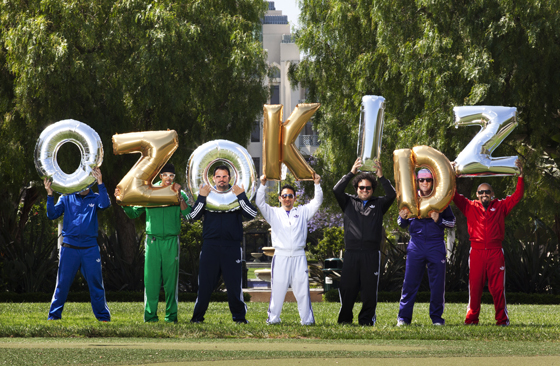
Germs – Ozomatli (OzoKidz)
I Am a Paleontologist – They Might Be Giants (Here Comes Science)
Make Me – Big Bang Boom (Because I Said So!)
Tickle Monster – Vanessa Trien and the Jumping Monkeys (Bubble Ride)
Green Beans Everywhere – Hullabaloo (Raise a Ruckus)
The Shark FighterSenorita Mariposa – Mister G (Chocolalala)
Sol Nal – Elena Moon Park (Rabbit Days and Dumplings)
15 tracks, 44 minutes

October Slow Jams

Bare Feet – Harmonica Pocket (Apple Apple)
Merry -Go-Round – Elizabeth Mitchell (Little Seed: Songs for Children by Woody Guthrie)
Mother Nature’s Son – Aaron Nigel Smith & One World Chorus (Welcome to the Village)
Underneath the Rainbow – Kira Willey (Kings & Queens of the Forest)
Even Bugs Are Sleeping – Caspar Babypants (HOT DOG!)
Time To Fly – Hot Peas ‘n Butter (Catchin’ Some Peazzz)
Goodnight Little Arlo (Goodnight Little Darlin’) – Charlie Hope (Keep Hope Machine Running: Songs of Woddy Guthrie)
Powder Blue Reprise – Renee and Jeremy (It’s A Big World)
Listen to the Horses – Raffi (Quiet Time)
Green Green Rocky Road – Randy Kaplan (Mr. Diddie Wah Diddie)
All the Pretty Little Horses – Laurie Berkner (Whaddya Think of That)
You and Me and a Bottle of Bubbles – Lunch Money (Original Friend)
Catch the Moon
 – Elizabeth Mitchell & Lisa Loeb (For the Kids Too)
Time – Johnny Bregar (My Neighborhood)
Sleep – Vered (Good Morning My Love)
15 tracks, 42 minutes

Elska Interview: Conversation with Shelley Wollert and producer Allen Farmelo

Middle of Nowhere is the creation of Shelley Wollert and producer Allen Farmelo. It is centered around a character named Elska, a modern pioneer living on an arctic island with her friends The Goobler, Arctic Fox, Winter Bear and The Nunni. There’s even a colony of lost socks!

Recently awarded a Silver Medal by Parents’ Choice and a 2012 NAPPA Honor (National Parenting Publication Awards) for Middle of Nowhere, the music of Elska invites children on an adventure into an imaginary world full of color and wonder. And while Shelley and Allen have been busy working hard on the release and videos, they took some time to talk with me about the creation of Elska, the production of Middle of Nowhere, Iceland and how they hope to inspire young, creative minds.

KCG: We love your album and I’m so glad you’re getting positive reviews. It’s definitely a unique thing in the kindie arena. You guys have really put some work into creating a whole story here.

Shelley: Yeah, it’s a really exciting time and I’m glad that you’re enjoying it. You know, we’ve been working on this project for a little bit over two years and it’s so exciting now to be able to walk out of the studio and be able to hear it with the kids, see that it’s coming to life and people are getting it and enjoying it.

KCG: Shelley, how did you come up with the character of Elska and where does her name come from?

Shelley: Elska means “to love” in Icelandic and the whole project was inspired by a trip that Allen and I took to Iceland together. Before that trip, we had begun writing children’s music together and it was pretty standard stuff. Then, when we took that trip to Iceland, everything changed. Our imagination was kind of ignited by this very unique place. It just really rebooted us, like pressing the button on a computer. I decided, with Allen, to create this character that had an island that was a special safe place, that was creative, that was newly formed, as any volcanic island is, and a place that was just filled with wonder. Actually, when we took our first plane trip to Iceland there was the word “Elska” printed on the back of the pillow that Icelandic Air gave us with the definition “Elska means ‘to love.'” So we had been throwing around these ideas and looking up on the internet for Icelandic words and that came back to us. It just seems like the perfect word for this character.

KCG: That’s a really beautiful story.

Allen: Yeah, we were actually trying to name the island at first and we called it The Island of Elska, like “The Island of Love.” And then the character didn’t have a name.

Shelley: It was going to be Shelley or my middle name, which is Kay.

Allen: Then one day I just said, “I think you should be Elska.” It took us a while to get that clarity, but we eventually got there.

KCG: How do you channel Elska? It seems like you really need to know that part of yourself in writing, videos and live shows.

Shelley: It’s very liberating to be in a place that’s so fun and creative. I’m so glad that I don’t have to be Shelley on stage. It’s far more interesting to walk into somebody else’s clothes and get into the origins of this character; what she’s like and what her history was. To play this modern pioneer who sees the most amazing things you could ever imagine is just a real privilege. Even though I might not ever communicate it during a show, it helps me really appreciate what I’m doing and what makes these characters and these songs so special to her. It really has been fully developed like any other role I’ve ever played on stage. It’s so much fun. I mean, who doesn’t want to hang out with The Goobler?

Allen: It’s been amazing to watch Shelley put Elska into the third person. I remember it happened in a recording session where Shelley said “Oh, I don’t think she would sing that melody” and I’m looking around thinking “she who?” “Oh, right, Elska.” And it freed me up as a producer, as well, to have this character who we were there to support and understand and develop all at once. At some point, Elska was very real and started to tell us what to do, which is an interesting shift in the creative process. I think when you know you’ve got something good and something alive, then it has its own logic and it tells you what to do instead of you creating it all the time.

KCG: This whole story is very interesting to me. How did you come up with the idea to make The Goobler very green and environmentally conscious?

Allen: Well, the environmentalist angle is actually throughout the island if you take a closer look at it. We don’t want to be heavy-handed and preachy about anything like that, so we have not made it overt. But, Iceland itself is an incredibly environmentally conscious place. They are the one place in the world which is aiming to get off fossil fuels very soon. They have an incredible geothermal resource and they are incredible preservationists. Many of the musicians and artists there are engaged in helping preserve Iceland from too much development. For example, Valgeir Sigurðsson, who mastered the record, wrote the soundtrack to a movie called Dreamland which is a documentary about saving a whole vast region of Iceland from hydro-electric development. So — being in Iceland is kind of like getting an education in what it is to be environmentally forward thinking and we built some of those features into the island [of Elska] itself. We have The Elska Express, which is geothermally powered. It’s a silent train, there’s no engine chugging along; it’s powered by steam that comes from the Earth. You have to solve problems when you live on an arctic island, and so we thought where does Elska’s food come from? Which led to us thinking well, the Goobler has a greenhouse and he knows how to do that. And there are other characters like The Nunni, who’s that little guy with one eye. He doesn’t have a song about him yet, but he’s an engineer who comes up with alot of the solutions; like the train and he built The Goobler’s greenhouse. So there’s this sort of technology and environmental angle built into a lot of it. We’re not sure how far we’ll take that, but it’s there.

KCG: When you were creating Elska and the characters for Elska, did you already have this written out or did it sort of flow once you visited Iceland and decided to pursue this?

Allen: It’s probably the most non-linear process ever.

Shelley: Yeah, it wasn’t like a coup de force where you get struck by lightening and everything gets put in place. It was the process of evolution. Just like the music, we revised and revised and revised and we pushed boundaries. We pushed story lines and said “Oh gosh, what are these socks doing?” and we kept on pushing the uniqueness of it. They don’t just live together they make art together, they rearrange themselves into giant pictures. We just kept on sort of developing the story and revising it over time.

Allen: The socks are an interesting point, because we actually came to a real struggle while Shelley and I were working on that song. We had the idea of a land of lost socks. We had no idea what they did and they kind of needed to do something — they couldn’t just be there. It wasn’t a pile of socks, it was a colony. I remember being in the studio and I [said] “What do they do, Shelley? What do they do?” and Shelley just blurted out “They’re like pixels! They make pictures!” and I said, “It’s stunning!” That was an idea that we had been trying to hatch for six months or more, and we had studio time booked and had to have an answer. So, everything in this project has been like Shelley said; about constant revision and then “aha” moments. We had just about every type of creative process fused together in the creation of this. It’s been more than anything, just a ton of work, wouldn’t you say?

Shelley: Exactly. What’s so exciting, now, is that because we’ve spent so much time building a foundation in character development, it’s so much fun to now expand these stories as we go forward — through different forms of media. We’ll be able to do a story about the train and how it works. So, from here, now that we’ve done the bricklaying, we can fill out the story to our fans and they can learn more and more about the characters as we move forward through more albums and more videos.

Allen: And you can’t go backwards once it’s released to the public.

KCG: Did you have any experience with children’s music or anything in the children’s genre before? What was your approach in deciding to get into this area of music?

Allen: Not much, aside from my upbringing, which was being drenched in children’s music. I drew on that as much as anything. I also had very particular tastes as a child in music. I was totally into Switched-On Bach which was kind of aimed at children, not entirely, but it really was a hit with kids. They use Moog synthesizers and we use a Moog synthesizer on this record quite a bit. So, the more I look back on it, I’m seeing a lot of my influences as producer of this record, probably were coming from my sensibilities growing up. I listened to The Beatles quite a bit so that influenced some of the pop writing and production clarity that we went for. I also think that I had the good fortune of not knowing too much about the current children’s music market. We made it in a little bit of a vacuum, to be honest, and we just tried to stay really true to our hearts. As much as we were making it for children, we were really making it for ourselves, wouldn’t you say?

Shelley: Absolutely. I taught children in my 20’s and taught musical theater, improv and fairytale theater and so I’ve had a lot of experience singing and performing for kids but never the opportunity to, as Allen said, kind of sit in a vacuum and completely imagine another world for that period of time and come out the other side. So I think we really just tried to stay true to ourselves during the process.

KCG: You could have just created a set of songs without characters.

Shelley: We had a pivotal moment in this coffee shop where Allen said to me “Look you can either be the girl behind the guitar or you can do your acting, your music, your drawing…” And I’m also an illustrator. So he said “Why don’t you do everything, just do it all! Wouldn’t that be a great choice?” And I thought, “YES!” So this has become my dream project. I get to illustrate, I get to design characters, I get to sing and dance and I get to write and play music. I also get to create with Allen and I get to be in character acting. So for me it was coming up with the dream job and then just going for it.

Allen: I felt like, as producer, I was tapping into one dimension of this multi-dimensional person, Shelley. For example, Shelley had a dream about The Goobler and then she drew it and I walked out of the studio and said “What if that guy was named The Goobler?” I have no idea where that came from. I think once you have one character, you just start to have more characters and they just grew from there. We just kept coming up with things. The next thing was Winter Bear — then the Arctic Fox came way late in the game. I didn’t know there was a fox until we were almost done with the record. Shelley said “I wrote a new song. It’s called “Arctic Fox” and my jaw dropped and I said, “well that has to be on the record.” The fox has become such a central character even though he’s quite elusive and doesn’t say much. So [the characters] came from dreams, they came from a song somebody wrote, etc.

KCG: So many successes are built on dreams it seems.

Allen: I think dreams are a way that adults can tap into their most free imagination. We don’t always get to use it the way a child is encouraged to use it –so I think sometimes our dreams are that place where we can play again.

KCG: When my daughter can bring to life any object, there is safety to it and freedom in building a story and Middle of Nowhere taps into that creative place for her. The music has this innocence to it. It’s very light and there’s not a whole lot of instruments.

Allen: Whenever I make a record, no matter who it’s with, I try to boil it down to what I call a guiding principle. It’s usually a phrase that we can return to to remember where we came from. The guiding principle for this record was “playful minimalism” — so when we had choices to make creatively, we would return to that as our guiding principle. Everything from a drum beat, we would try and find the simplest version, to a bass line, to a melody, to the logo, to Elska’s name, to anything that could be stripped down to its most minimalist and yet most playful state. I think that maybe what you’re hearing in the music a bit is a reflection of that guiding principle. That playfulness and that minimalism does give it a nice clarity and innocence.

KCG: Do you have a target age range in mind for your audience?

Shelley: We sort of think it’s for a lot of different ages. We haven’t set a target in our minds — and we’re finding kids very young are liking this and we’re also finding fans that are six, seven, eight years old. We’ve had some adults really like this project. “Hiddi Hiddi,” the video, showed up on some rock blogs saying “look at this trippy video.” It’s kind of cool how it’s hitting different age groups and sectors in its own way. So we’re just really staying open to it and inviting everybody to the party in a sense.

KCG: What do you want kids to get out of this?

Shelley: One of my big intentions for this project, and what really fuels me forward is that I just really want to give kids that break in their day,and that experience in their childhood where they could sort of befriend a creative person and place where they feel safe and excited and creatively stimulated and interested. For me, it happened with the Wizard of Oz when I was about four. It was such a relief to me. I think it can be very demanding to be a little kid — in a busy household with lots going on. So my intention was to create a really beautiful part of a child’s day or childhood, and I think for some kids it could bring them a lot of relief, if they are in a challenging situation. So, I just wanted to bring a sort of peace and happiness.

KCG: Were you a musician before, Shelley?

Shelley: It’s funny, I’m sort of an Alt-Country musician and I sort of had a jazzy-bluesy thing going on with my own singer-songwriting project here in New York. I was playing the clubs, etc, and so my voice, in doing this album, is very different than what I sound like when I’m singing my adult music. I had been doing [a lot of things] for a while — I was doing political cartoons, I was playing adult music in rock clubs, I was doing children’s music here and there and some voice over work. When I got together with Allen, producing, he just really encouraged me to focus on just one thing. Boy, has it really really paid off. I stopped gigging in New York and everything became about developing Elska. So it’s been a delight to just go [deep into] one thing.

KCG: Now that Middle of Nowhere has been released, what are the next steps for Elska?

Shelley: We have been really just focusing on the release of Middle of Nowhereand now the videos. With all of this now in motion, we’re focusing our attention back onto writing. We got an artist’s residency in Iceland. So we’re returning to Iceland to write the next record and various Elska materials there. It was really important to us to find time to get away from New York to do it, because it just seems that when you’re sitting in your apartment or studio there’s always something to do; another email, CD’s to ship, phone calls and so we really just wanted to get ourselves in the writing mode and take this retreat. We do write in New York, as well, but we love [Iceland] so much that it’s kind of becoming a second creative home for us. We just kind of want to go back and give ourselves the mental space that it allows.

Allen: This opportunity for this residency fell in our laps, as well. It was funny how it came up: the people saw Elska and just loved it. They offered us up this residency and so you just have to say yes to things like that.

KCG: Going back to the sound of Elska. Did you try other sounds or other types of music to pair up with the vocals? How did you narrow down to an electronic sound?

Allen: That’s a really good question. There came a point where we realized that there weren’t any guitars on this record and I came into a realization, as a producer, that it was really hard to make something sound truly otherworldly while still using the guitar. The guitar almost automatically locates music in Europe or North America; it’s the Blues, it’s Country, it’s Rock, it’s Folk, it’s Classical guitar, it’s Spanish, it’s Irish Folk, it’s all of these. It has so many associations, so to truly break away from that instrument and start using other sounds, helped the music become as wonderfully otherworldly and fictional and unto itself as we could get it. So I think that’s a big part of it. We had guitar on The Elska Express for a while and a bunch of other songs. I think half of the songs are probably written as guitar songs that we then translated into these other forms.

Shelley: “Click Click” was a country song and it’s straight up electric dance music now.

Allen: A lot of that was my influence of trying to bring the music into a really unique sphere. So, abandoning the guitar altogether was, at that point, how I was doing it. And for what it’s worth, I’m just now starting to work with guitars again as a producer. I feel like I need to come back to them and use them interestingly and creatively again. So, I think that’s a big part of that record, and it’s such a dividing line. If a record has guitars, it’s going to feel a certain way and if it doesn’t, it’s more open to a different kind of sound. But, there’s a lot of acoustic piano, there’s a lot of acoustic xylophone, there’s a lot of acoustic drums and some straight up electric bass. So, not everything is a programmed synthesizer or beat on there. There are a bunch of acoustic elements as well, so we did manage to marry acoustic and electric in a pretty unique way. But, we really tried to get away from the genres that we felt were trapping us a little bit in North America. When you create a place as weird as a newly formed arctic island that doesn’t actually exist, it puts a certain challenge in front of people like “Well, what’s the music from that place?” The sounds locate the music in different ways. It’s just an interesting thing to think that I have a globe in my hands when I select instruments, and I can locate things in different parts of the world.

KCG: Bjork comes to mind with this kind of music. Do you think you could ultimately be compared to a Bjork for kids?

Allen: Bjork and Sigur Ros, from Iceland, have been huge influences on me. And our friend Valgeir Sigurðsson, who mastered the record, has produced much of Bjork’s records. We very directly used the technique called “micro beats” which is something Valgeir invented with Bjork when they made the record called Vespertine. And we’re also very influenced by an Icelandic band that’s lesser known called Múm. They use micro beats in this interesting way. So, in a lot of ways, the micro beats that you’re hearing on “Arctic Fox” and “Man-Made Hole,” where we’re using all those little clicky sounds, those sounds really came from Bjork, Sigur-Ros and Múm; they all use them. It’s very Icelandic in origin.

KCG: With regard to “Arctic Fox,” what did you use to create the sounds of the micro beats?

Allen: The micro beats on “Arctic Fox” are made from kitchen utensils, cat toys and other household objects. We sampled those and then programmed them into the beats you hear on the song.

KCG: Bjork’s voice reminds me a lot of your voice Shelley. It has this very sweet, soft tone to it.

Shelley: Thank you for that compliment. She’s such an original, amazing artist.

Allen: Probably part of that is the production technique there, which is that Elska never sings very loudly. We use a technique that is called “crooning” sometimes, but I call it “super hot microphone” technique. It’s where you set up the microphone so the singer can almost whisper, and then ends up with a sweet sound in their voice and a lot of intimacy. I know that’s something that Bjork has used over the years, too. And then live, Shelley wears a microphone so she can sing in that style, as well, so it translates better. But, I think they’re very fair comparisons that you’re making there, very spot on.

KCG: The technique you use is very inviting. My daughter is intrigued when she hears Elska and watches her in the videos.

Shelley: We really wanted this project to be concave so that it’s inviting people into this project, instead of coming out of the screen with all these fast edits, big voices and loud, crazy noises for kids. We wanted this to really be a project with stillness and invitation and warmth.

KCG: How are you guys going to translate this on stage?

Shelley: Right now I have a vibraphone player and then I have another musician who’s playing these really great analog synthesizers, called “pocket pianos,” and a Moog Bass and a drum machine. And then I’m acting, singing, using props and introducing the characters during the performance. It’s very much a blend of storytelling, theater and music.

Allen: The live show is quite different from the record, and it’s a really beautiful and unique experience in and of itself, especially with a live vibraphone and the way they’ve worked out the tunes for the live performance.

KCG: Shelley, you get dressed up as Elska and wear the same thing throughout the show?

Shelley: Oh absolutely. I come out on stage and just start with “I’ve come from the Island of Elska.” The kids are only seeing Elska and learning about the island.

Allen: The kids are mesmerized. It’s fun to watch the kids tune in.

KCG: Shelley, do you play any instruments or are you singing the whole time?

Shelley: I play a xylophone during “Winter Bear,” but other than that, I’m singing and dancing and playing with props.

KCG: Do you have actual puppets or stuffed creatures?

Shelley: Right now there’s these giant cut-outs that we had printed. So when I say “Have you met my friend The Goobler?” I go and get this beautiful cut-out of The Goobler and I say, “Let me show you a picture of him” and I talk it out and then we sing the song. So I just have some really vivid props.

KCG: Do you feel protective of the characters? Like when you sing “Don’t Make Fun of the Goobler.”

Shelley: I’m very protective of him during that song. Wait til you see the video!

KCG. Now that you are in the kindie scene, have you gotten to know and listen to other artists in the same genre?

Shelley: Absolutely! We were invited to perform at Kindiefest which was AWESOME! It was TOTALLY AWESOME! We got to meet everybody, who was there at least. I have just really been enjoying the friendships that we’ve made and checking out everybody’s projects and videos as they come out. There’s so many incredible artists and it’s just been so much fun.

KCG: This album feels like an introductory album, almost like Stage 1 of what’s to come.

Allen: Very much so. When you are presented with these characters you don’t really know what they are going to do, but you can talk about them, you can play with characters, you can imagine what they do, and we’ve left it wide open for ourselves, as well, in order to keep creating stories and albums. The videos are turning out to be incredibly fun, creatively rewarding and beautiful, so we see so many different avenues that Elska can go down, but we definitely see it as a musical project with a lot of records coming down the road eventually. We’re gonna dig in and write the next record or two, depending on what happens here, and start working on that in 2013, in earnest. But, we’ll start writing it this Fall in Iceland. It feels very wide open and we can do so many things like finding new partnerships and collaborators and just building it and building it.

KCG: Do you guys collaboratively write?

Shelley: It goes both ways and then when we’re done with it there’s so many footprints from both of us. In the example of me writing “Arctic Fox,” I think I wrote it on a xylophone and just sang it out loud and brought it to Allen. Then he comes in and there’s the micro beats and they all create the sounds. Allen wrote “I Just Had an Idea” and then we get into the studio and I’m working on the lyrics and we’re both creating the sound of it and all the sparkles that go through it. Or, with “Click Click,” I can write the verse, and it was a country song and then Allen wrote the chorus, and it became a pop song. So, we really cross over constantly in our writing.

Allen: It’s a really good co-writing collaboration and we share the writing credit on the whole album 50/50. Songwriting is such an interesting craft. It involves lyrics, it involves melody, it involves harmony and chord changes, and Shelley and I bring different sensibilities to each of those aspects, and they just show up in different ways on different songs. I don’t think either of us could have written any of those songs alone.

KCG: Do each of you have a favorite?

Shelley: Well, it changes a little bit. We’ve both become very smitten with a song we’re calling “the sleeper song” on the album, which almost didn’t make it, “The Middle of Nowhere.” And now, when it comes around on the record for me, I just really love it. A lot of parents have been loving it, too. I just performed it last weekend and people were saying, “Wow that’s a really cool song.”

KCG: Yeah! My daughter picked up on the arrows and was very interested in what Elska was doing with them. So, I can personally say it reaches younger kids because she is really into the adventure.

Allen: The song I keep coming back to as a favorite is “The Elska Express.” That vocal that Shelley gives on that song kills me every time. I just love it. I don’t think I’ve ever felt so much true wonder and beauty in a track. I just love the way that feels to listen to. And, there’s barely anything to that song, and I just think it really works. I think that may be my favorite in the end. It’s that vocal that gets me.

KCG: Are there any challenges to being Elska?

Shelley: I always need to be on high alert that I am being as authentic as possible. I don’t want to end up being a Barney, you know, I don’t want to go too broad. I want to make sure that I really mean what I’m saying and I think that there’s a real danger with being a costumed character that you’re going to alienate folks. But, I have to be honest, I haven’t alienated a young audience member. So, parents might be wary of a costumed character, but after the first song they tend to say “Boy, this is real. This isn’t condescending. This isn’t for babies.” My real concern and focus is that I have to really make this as wonderous and wonderful and honest as Christopher Robin walking through the woods with Winnie the Pooh. There isn’t any talking down to children, and I think that’s very challenging and something I have to always patrol.

KCG: And with kids, parents are watching too.

Shelley: Yeah, that’s a lot of pressure. After a private show I did, I was just swarmed by kids and they really thought I was real. They just said, “Are you going to go home to be with The Goobler? What are you gonna do when you go home with The Goobler?” And I’m saying “Oh you know, I’m gonna go home and tell him about New York City.” It’s just real to them. That brings a lot of responsibility on my end, and that’s where you have to be really, really careful with that. I really, really want this to be real for them, because it opens up that imagination. I mean, they had a ball and they had a new friend, as a result. So I’m really committed to making this really from the heart as much as I can.

View this: “Man Gave Names” – Aaron Nigel Smith

Great new video from Aaron Nigel Smith‘s recent release Welcome to the Villagefeaturing the children of One World Chorus and some enthusiastic puppets who each land a role as an animal in the song.  Listeners will be entertained as they hear Laurie Berkner, Lucky Diaz and Secret Agent 23 Skidoo rock out with Aaron and the rest of the children, er I mean animals, to a rendition of Dylan’s “Man Gave Names to all the Animals.”

Enjoy!

[Courtesy of YouTube]

Check This Out: Welcome To The Village – Aaron Nigel Smith

“Welcome, we wish you peace. Welcome to the village, share a song with me.” Those few words speak volumes on Aaron Nigel Smith‘s latest release with One World Chorus, Welcome to the Village, where over 300 children sing renditions of songs from greats like Bob Dylan, Bob Marley, The Beatles, Jewel and Louis Armstrong. Incorporating an eclectic mix of reggae, classical, world and american folk music, among others, Welcome to the Village welcomes families into a cultural celebration of love and gratitude for the things we have and the people around us.

Welcome to the Village is Aaron’s first release with the children of One World Chorus, a non-profit organization committed to using music as a mechanism to “build bridges” for children, both in the United States and abroad. Aaron and his wife, Diedre, co-founded the chorus in 2009. Over the course of the last couple of years, Aaron spent time traveling around the U.S. between Portland, Oregon, Los Angeles, New York City and all the way to Nairobi, Kenya where 30 kids from the Cura Orphanage participated in the recording of this album. The Cura Orphanage is a special place that offers residency for children who have lost their parents to AIDS. Proceeds from the sale of Welcome to the Village will be donated to the orphanage in hopes of building sustainable music and programming.

Aaron carries an extensive background in music and movement, which began while he studied and performed with The American Boychoir School at age 11. Seeking out his passion and love for music, Aaron along with his wife Deidre, founded FUNdamentals of Music and Movement in 2002. FUNdamentals of Music and Movement serves as a music program for over 100 early education centers nationwide.

As much as it is quite evident that Aaron is a talented musician and songwriter, he has also done an excellent job of selecting songs for Welcome to the Village. On a couple of the songs, Aaron brought in fellow friends and highly acclaimed kindie artists for some sweet collaborations. Starting with a rendition of Bob Dylan’s “Man Gave Names,” Laurie Berkner, Lucky Diaz and Secret Agent 23 Skidoo, each join in as an animal while adding a touch of their personality to the mix. There’s even perhaps a subtle reference to Blue Bear as Lucky sings “…great big furry back with blue hair.” But the real showstopper is when Skidoo jumps in with a quick lyrical jaunt about a Platypus which blew our minds! This strange creature has been of particular interest to my daughter lately. Prior to hearing this song, and in just a few seconds, Skidoo schooled us with way more eloquence than I could have managed. It’s an exciting and well-thought out rendition of this classic, oft covered song.

“Grateful,” one of the originals on the album, features Dan Zanes. The song will warm your heart with Zanes’ Dylan-esque vocals encouraging us to give our “friends a big hug for all that they provide.” It’s oozing with sincerity and appreciation for the people around us, the beauty of the planet we live on and the air we breathe. The song is a prime example of Aaron’s talent to write and compose a deeply meaningful, authentic song.

But the true authenticity in Welcome to the Village is of course, the voices of the children, including Aaron’s duo with his son Zion on the Beatles’ cover of “Mother Nature’s Son.” In fact, it was Zion’s idea to sing the song and include it on the album. There are also traditional African songs which include rhythmic, multi-layered percussion, signature to the sounds of that culture. It’s actually these songs that my 3-year-old likes the best. Starting with “Fanga Alafia,” Em’s absolute favorite and one that she sings on her own even after the album is over. And, when I don’t sing the correct pronunciation (in her opinion) she is quick to correct me. There is also “Che Che Cole,” a fun call and response song to which Em immediately participates as if she’s part of the chorus, while Aaron calls out and the children respond masterfully. The album ends with a traditional choir song called “Siyahamba” which can be translated into a song about unity and peace.

Other notable songs include a slowed down, Dub style rendition of Jewel’s “Hands,” which features the kids from the orphanage. The song fits in nicely with the sentiment behind Welcome to the Village as it was meant to provide hope in the face of misfortune. The song is led by a female soloist whose voice is similar in pitch and tone to Jewel’s. The hauntingly beautiful rendition brings me chills as I hear the innocence and emotion of the children’s voices. There is also the educational “In A Book,” an educational reggae song written by Aaron, featuring his son Zion, as a soloist, along with the kids from the chorus spelling out words. For example: Aaron: “It’s in a book .” Chorus: “That’s right, a b-o-o-k.” Even if your little one can’t quite spell yet, he or she is given the opportunity to learn while singing along with these simple lyrics.

My personal favorite happens to be “Sound the Trumpet” which features Aaron (and a male vocalist from the chorus) flexing his operatic muscles on this short, classic piece. I pretty much just love to roll my r’s along with the guys and pretend I actually am an opera singer.

Welcome to the Village is a true reflection, regardless of age, who, what or where you are, you can experience and participate in the joy of music. Not to mention children love to hear other children sing and Aaron is no stranger to making quality music for families. In addition to being a father of two sons, who both appear on this album (as soloists and part of the chorus), he has received various parenting awards for his first two releases Let’s Pretend and Everyone Loves to Dance. He has also appeared on the PBS Kids Emmy Award winning show Between the Lions and is featured on several new Music for Little People releases, including Buckwheat Zydeco’s Bayou Boogie, and World Travels.

Music is fulfilling, brings people together and is meant to be shared. This is exactly what Aaron and the children of One World Chorus bring with the release of Welcome to the Village. In Aaron’s words, “When kids sing together, I hope that they enjoy sharing the gift of music and learning a valuable discipline that can be used to promote positive change in the world. It’s great to see the light in kids’ eyes as they realize just how many other kids are participating in the project.”

On this album, it literally took a village and then some, to create this special treasure. So kick off your shoes and stay a while; you won’t be disappointed. Ages 2 – 5 will enjoy learning, singing along and participating in the album.

See below for videos related to the making of Welcome to the Village.  You can learn more about and support One World Chorus here, as well as, the Cura Orphanage Home here.

Digital samples and downloads can be found on Amazon. The album is also available for download and purchase on iTunes.

[Courtesy of YouTube]

Disclosure: I received a copy for possible review and was overjoyed to provide my honest opinion regarding the album.

FREE DOWNLOAD: “Falling” – Joanie Leeds

20120924-224711.jpgAutumn is my favorite season! And, as we just passed the first day of the season, it’s only appropriate that we celebrate with a free download from Joanie Leeds. “Falling” is a celebration of what makes Autumn so special. Leeds grew up Miami and is now living in New York City. As a northerner, Leeds was inspired by the seasonal shift in her surroundings. With a golden tone to her voice, Leeds takes us on a whimsical ride as she falls in love with crackling leaves beneath her feet and the beautiful colors in the trees above her head.

If I were to create a personal soundtrack for Fall, I would want this song playing while running through the leaves and tossing them around with my daughter. It’s just that kind of song.

Grab a free download through the Soundcloud widget below and listen to the song while sipping some apple cider, driving to the pumpkin patch or making pie with the bounty you’ve collected from the orchards.

View this & FREE DOWNLOAD: “Take Me To The City Dump” – Caspar Babypants

A FREE Caspar Babypants download and a new video!

The song, “Take Me To The City Dump” was made in honor of the late J.P. Patches.  J.P. Patches was a very popular clown and star of The J.P. Patches Show, a long-running and very popular Seattle children’s program.  J.P. was a great inspiration for Caspar’s frontman Chris Ballew.  In fact, the song was written by Ballew and performed at J.P’s public memorial service. The song is exclusive to this video and will not be on the new album but hey, anytime we can get our hands on some new Caspar stuff it always brightens our day.

Check out the video below and grab a free download of the song here.

Courtesy of [YouTube]

View This: “Arctic Fox” – Elska

We are currently going through the stage in my daughter’s life where she is afraid of the dark.  So, before she goes to bed, we talk about things that are colorful and bring joy into her life.  Often times, it’s things like  ladybugs, rainbows, flowers, puppies, cookies, lollipops, you get the idea.  Recently, we purchased a wooden dog on wheels from Plan Toys that has been sleeping in her room at night.  We have also  been listening to Elska non-stop.  “Arctic Fox” is one of the songs that really resonates with her.  As a result, she has decided that her new friend is an “Arctic Dog” who will bring her good dreams.

“Arctic Fox,” the second video from Elska, provides us with another clue as to what happens on the Island of Elska.  The video is similar to Elska’s first release “Hiddi Hiddi” except we are introduced to the elusive Arctic Fox who sleeps on her head at night and brings good dreams.  Thanks to Andy Biddle‘s stop-motion animation, the Arctic Fox is brought to life and is just as cuddly as the song makes him out to be.

[Courtesy of YouTube]

Putumayo Kids, LeapFrog and Pictures!

Ok, I admit it, a huge motivation for me to drive 30 minutes and pay close to $40 on admission for our local Children’s Museum is because they have a dance room which plays nothing but Putumayo Kids albums. And even though said museum is a great playground for those that toddle, we spend most of our time movin’ to eclectic compilations as they come to life through surround sound speakers. Of course, trying to catch the moving lights on the floor and sparkles from the disco ball is fun too, but it’s all way more colorful when you are surrounded by world beats.

So, I am pleased to announce that Putumayo Kids is partnering up with LeapFrog and will release 4 of its award-winning full-length Playground CDs exclusively from LeapFrog’s App Center (http://www.leapfrog.com/en/appcenter.html) for Leapfrog’s LeapPad1 and the recently launched LeapPad2 and LeapsterGS.

Three of the four digital releases, European Playground, Jazz Playground and Cowboy Playground, are now available at the link above. The fourth upcoming release, World Sing-Along, includes two songs featuring Dan Zanes, as well as, Frances England’s “That’s What Friends Are For” (originally featured on the Many Hands: Family Music For Haiti release from Spare the Rock Records).  Children from Pihcintu Multicultural Children’s Choir, which features refugee girls mostly from war-torn regions, will sing “Around the World” to close the album. The release will be made available to the general public on October 30th and through the LeapFrog App Center on November 6th.  You can enjoy a free preview the album through the Bandcamp widget below.

Putumayo World Music will contribute $5,000 from sales of World Sing-Along during the period October 2012 through October 2014 to Population Services Internation (PSI) in support of its Five & Alive® campaign to ensure that all children have a healthy start to life, no matter where they are born. For more information about PSI, please visit www.psi.org.

Putumayo is also pleased to offer its first photography calendar, Children of the World, featuring images of children from Africa, Asia and Latin America by renowned photographer Jon Kaplan. Ten percent of Putumayo’s sales of the calendar (available October 1st), will be contributed to Seva (www.seva.org), a nonprofit organization which builds sustainable health programs that serve vulnerable populations around the world and help end preventable blindness, that has restored eyesight to more than 3 million people.

View this: “Fall” – Orange Sherbet

My favorite season is slowly moving in as the days are becoming shorter and the apples are ready for pickin’.

Just in time for Fall is Orange Sherbet‘s video under the same name.


FALL from Orange Sherbet on Vimeo.

Interview: Chat with Raul Pacheco (Ozomatli & OzoKidz)

For 18 years Ozomatli has made quite an impact on the world, gaining much notoriety for their outspoken and passionate political views. Starting from the Peace and Justice Center in Los Angeles, where they began jamming together, the band was quickly recognized and in 2007 they were invited by the U.S. State Department to serve as official Cultural Ambassadors on a series of government-sponsored international tours to Asia, Africa, South America, and the Middle East. Additionally, in 2010 the City of Los Angeles officially made April 23rd “Ozomatli Day,” based upon the band’s efforts for and in support of the city.

Throughout their career, Ozomatli has primarily been blasting out hits for adults and has accumulated quite a fan base over the years. However, about a year ago they decided to put their artistic efforts into creating a full length kids album under the moniker of OzoKidz. Ozokidz still contains the signature cacophony of sound that is part of what makes Ozomatli so thrilling to listen to. You can’t help but be drawn into a dance-induced stupor while moving your body to the hypnotic sounds produced by the 7-piece band.

The careful construction and work put into the album is impressive. Many of the songs contain lyrics aimed at educating kids and prompting intellectual conversations about things like photosynthesis, germs, spelling and planets. It’s been such a pleasure enjoying music with my daughter by a band I have been a fan of for many years. It’s pretty wacky that a band I used to listen to in my “youth” is now making music for an even younger generation. This is a beautiful thing, sure to benefit kids for years to come. Listening to OzoKidz is like listening to a non-stop musical party.

I am pleased to present a conversation I had with Raul Pacheco (Electric guitar, Tres, Jarana, Lead vocals, Background vocals) about the record.

See below for details on where to pre-order your copy of OzoKidz, a sample clip and download for “Balloon Fest” and some information on getting a super special OzoKidz chalk box!


KCG
: On the OzoKidz album what song(s) is your voice most prominent on?
Raul: “Balloon Fest” and “Sun and Moon” is me. I also sing the chorus on “Let’s Go To The Movies.”

KCG: Were you guys thinking of targeting a specific age range for OzoKidz?
Raul: I think…under 10. I mean, I think we were really thinking something meaningful like that. Appealing to bodies that are not afraid to act silly, kinda vibe.

KCG: Older kids are probably either listening to Ozomatli or influenced by peers or songs on the radio.
Raul: Yep, definitely.

KCG: I was watching the Summit 11 video that you guys did and some questions relating to OzoKidz popped up for me. You guys have always had an active voice in politics. With regard to OzoKidz, it’s juvenile, very light-hearted and exciting. It seems to really appeal to kids in your targeted age range. Have you thought about supporting causes for kids as OzoKidz?
Raul: Definitely. We have before and we’ll probably continue to do that. Regardless of this CD I mean we’re always doin’ stuff for young people. We support alot of music in our programs in Los Angeles and also in other parts of the country.

KCG: What about things like bullying or guns? Now that you’re doing kids’ albums, is there something that you would think about in terms of representing through song, with regard to bullying or guns or acceptance in terms of cultural or ethnic diversity?
Ra: I think we’d be all for it. When making this music, we weren’t specifically thinking about what causes we would get into. I think we were thinking about making kids music. I think we have a reputation of supporting kind of proactive organizations, highlighting issues that are important to us. I don’t think that would change and I think that this does offer another opportunity for that. But, we haven’t done anything specifically in regards to this CD.

KCG: In your opinion, what is kids music?
Raul: I think it’s music that has kind of a more innocent, lighter, celebratory tone. That’s not every kids life, but I think with the music we were trying to make, it was really about introduction to some ideas that we talk about in the songs. Some ideas of nature, some ideas of conservation, some ideas of health. And some of it’s also just things that resonate with young people. Certain things they can be involved in or like. So when you say what is kids music, to us I think it’s a sound. There’s a traditional kids’ market — which we found out about as we were doing this. We wanted to make it a little more detailed. Essentially we just didn’t want it to be for kids. We wanted parents to enjoy it with their children.

KCG: I think you accomplished that, definitely.

KCG: How long did it take you guys to write the OzoKidz album once you realized it was an idea you’d like to pursue?
Raul: I mean it took us a long time because we were doing it while we were doing other things. So, I think over a year. Around the period of the year…we would work on it alot for a few months, leave it alone and then we’d get back to it. I think it always takes a bit longer to make recordings because we’re always working. So yeah, it happened over a year.

KCG: You guys have done work in an orphanage and for blind kids. During the time that you have done things abroad in the presence of children, had it occurred to you to do something like OzoKidz?
Raul: No, I think it was just an idea that came out of our own, ya know, the passing of time. We’ve been around for 18 years so we ourselves have children and alot of our fans have children. And it kept coming up for people. So it was like “oh well would we even venture to do this?” I think when the idea first came up, people weren’t necessarily into it. But as we thought about it a little bit more people thought is this something that we can pull off and have it be cool and not have it be corny, and could we separate OzoKidz as its own entity away from Ozomatli enough so they don’t overlap. We don’t want them overlapping. We really want a distinct experience with the music and the shows. They’re very different in what they’re geared toward. Once we got over the idea that just because it was a little different or whatever fears we might of had about it being corny, or whatever, we were able to dig in and really make a solid kids album. Like if we were going to do it, let’s make a really good one and we feel pretty proud about it, actually.

KCG: You guys did a really nice job with it. You stayed true to the Ozomatli sound. But then listening to the words I was struck by how detailed you get in the songs. You actually drop some science in some of the songs.
Raul: Yeah!

KCG: Clearly you thought out some of the songs like Germs and Trees and even Sun and Moon. The Tree Song is definitely like wow, you know you go from the seed and even mention photosynthesis. That to me was a nice surprise. And then there’s “Germs” which my daughter seems to be really concerned about these days, especially when it comes to brushing her teeth. Let’s start with “Germs” in particular. You guys go through germs in your body, you go through bacteria in medicine, and you really get deep into the details of it all. How did that come about? Did you do research?

Raul: What was really helpful in that is that we had done these kid songs for PBS Kids first. And they were super adamant about the lyrics. We had to keep it simple but creative, informative. I mean they’re really coming from an educational perspective. And these guys have been doing it for years. It’s their careers, they make kids media for PBS. And PBS has to have a little bit more of an educational purpose in it. So, from that experience we really took that and put that into some of these songs. Like, how to really make a list of things and really put them in a way that was clever but not too petty; enough information where you’re being challenged but not too much information where you’re just overwhelmed. So I think with a few of those we did a pretty good job of really having that balance so that anybody listening to the song can have some kind of relationship to it. If it’s the kid, if it’s their parent. It could be a conversation piece. And musically, they’re all different styles and so there could even be a conversation piece about that. But I think it’s like getting young people to have discussions about it and young people with older people, ya know, who are their teachers or who are their parents can kind of be able to have this shared experience on this music and on these subjects. So I think this experience before of writing songs for PBS in hindsight, was really helpful.

KCG: Typically with Ozomatli there is alot of Spanish. With the OzoKidz album there is some Spanish weaved into certain songs and then there’s Changito. Did you think about balancing Spanish and English for this album?
Raul: Yeah we did, we thought about it. There were some Spanish songs that didn’t make it in the final cut, because I just think that those songs weren’t as good. And I don’t think it has anything to do with the language. It’s just those particular songs were not as well rounded and they just weren’t as good songs. For me, I wish there were more but it’s not the way it came out and, at some point, we just let it go.

KCG: How many people contributed to the writing process on this album?
Raul: Ya know, I think it’s the same way for all of us. Some songs are all of us, some songs are just a few of us. It’s never really like either or. Sometimes it might be one person really spearheading it. Sometimes it’s everyone taking a piece and contributing. It really varies.

KCG: Does the music come first and then the words? Is there a method to the writing?
Raul: There’s no method. I prefer that. There’s no method. Just whatever comes out. We start to gravitate towards what moves everybody.

KCG: Do you have a personal favorite on the album?
Raul: I guess like with all our music, I go through phases. So, on this one…I think the ones you mentioned, “Trees” and “Germs.” I like to play “Germs,” it’s fun. And even though I sing “Balloon Fest,” that was alot of fun to play too. They’re funny, ya know? When you’re singing with these little kids, they’re just staring up at you wondering like “what’s all going down.”

KCG: But it’s so authentic. Kids are pretty honest and you can tell right away if they’re getting into it.
Raul: You have to be better at reading. Cause they get bored quick. When you perform, it’s like you have to be really engaged with them. Our shows are not more than 40 minutes long. But overall the shows are alot of fun.

KCG: I can tell you that my daughter loves Moose on the Loose. When we got the album, she was dancing so hard that I think we only got as far as “Exercise” before she had to stop dancing because she was sweating and exhausted. There is just no other way to enjoy OzoKidz. When you put the album on, it’s nothing but a party. You’re just gonna dance and move your body and get into it.

KCG: Were you influenced by other kindie bands or had you done any research into what other kids’ musicians were doing?
Raul: I think we did it more like finding out if this was even viable for us to do. And then our manager researched it and said “yeah, there was a whole bunch of people doing this.” And we heard some music just to kinda get an idea and then I think part of our own competitiveness was like “Oh we could do this, we could do a good job at this, actually.” When you’re around for as long as we are, we try to do some things that we’ve never done before. And this was alot of fun. I think one of the things is that there wasn’t as much pressure we would put on ourselves as we would with an adult Ozomatli record. So I think there is something that we definitely walked away with from this process that we’ll be bringing back into our own music.

KCG: Did you learn something about yourself that you hadn’t felt or noticed making adult records that you could take back to your work as Ozomatli?
Raul: I think that sometimes we have a constricted view of what we can be as a band. Part of that is practical because you don’t want to alienate the fans you already have. It’s like a business. Part of it is constricting though, also. My particular idea is that I always wanna do stuff different. I don’t particularly want to be bound by our history. But, you know, you are on certain levels. You know people expect something from you. And when you don’t do that, it’s like “oh they’re not the same band.” Well, I aways try to remind people we’ve never been the same band. Like whatever vision you have of us in your head, is really your own. Our first record is very different from the next one, which is very different from the next one, which is very different from the next ones, and so on and so on. We’re all the same people playing on them. I find my own artistic life more interesting to push those boundaries as much as possible. I mean we’re writing music now for an adult record which sounds very different from the ones we’ve done before, and it scares some people and some people really like it. So, who knows what it will be in the end. But, I as a musician, I prefer that. I prefer kinda going through these places that are different for us. And I think the kids record was actually that also. There were some of us that just didn’t wanna do this and it’s like “Why what is this about?” and they sit around and talk about it and you know, you kinda have discussions, then all of a sudden the group seemed to be open to it and then that’s cool. So it’s just another shift; it’s something new. And I think once you commit to doing it, there’s already good value. So overall, like I said, I’ve been really happy with it and people seemed to really like it, which ultimately is what is important.

KCG: Are there still more OzoKidz songs out there that didn’t make it to this album?
Raul: Yeah! Yeah, there are! You know when we write, we write a bunch of songs — and so I have a feeling we are going to do another one, I just don’t know when. But, I’m sure there’s gonna be some more songs coming out.

KCG: Do you think that you’ll play some of those at live shows?
Raul: We really separate these songs from our adult stuff. All the songs on that are on the CD we’ll play at the OzoKidz show, but you won’t hear some of those songs at one of our adult shows. That could always change, but that’s the way it is right now.

KCG: Did you test out OzoKidz on any kids before releasing it? Like your own kids, for example.
Raul: No. I mean there are some songs that we played at kids shows before the CD came out but no we just kinda went for it.

KCG: Do you happen to have a message to kids listening to this CD or anything that you want to say to your audience or their parents?
Raul: It’s really for the kids. Ya know, it’s just really for the kids. And I would say to turn it up really loud and dance all around your house.

KCG: And that’s what I would say as well.

KCG: “Sun and Moon” reminds me of a Yo Gabba Gabba song. Have you considered appearing on Yo Gabba Gabba or have you been asked to work with them?
Raul: We’ve played their live shows in California. We’ve been Super Music Friends on their live shows, which are huge, it’s crazy.

KCG: So, on a more personal level. Are you still dancing to the Jackson 5?
Raul: Oh yeah. I used to get money from the neighbors to show up at parties and then get down. I’d walk out with 5 bucks in quarters and then take it to the store.

KCG: Do you still do that?
Raul: Not for money. But I’d still do it. I heard Jackson 5 the other day. It was rockin’.

KCG: Jackson 5 is classic.
Raul: It’s good stuff.

KCG: Well, Raul, thank you for your time. It’s been a pleasure and we look forward to the official release.
Raul: Thank you

OzoKidz is currently available for pre-order on iTunes and Amazon and will be officially released on September 25. You can also listen to digital samples from Amazon.

As a bonus, if you purchase the Ozokidz album at participating independent stores, you will receive a FREE Ozokidz chalk box that includes a link to the bonus track, “Vamos A Cantar.” What’s more exciting is that you’ll be able to participate in the Ozokidz Chalk art contests. All you have to do is recreate the Ozokidz album cover art on your driveway or sidewalk. For the bonus prize, you can create a visual representation of the bonus track “Vamos A Cantar,” using the Ozokidz chalk, send in photos of your artwork and they’ll pick the best ones. Winners will receive an Ozokidz prize pack! Send photos to ozofans@gmail.com. When sending photos, please include the Ozokidz chalk box in the photo. For a list of participating independent stores click here.

You can enjoy a sample download from the album called “Balloon Fest” below.