Check This Out: Justin Roberts – Lullaby

album_lullaby_lg

Justin Roberts, multi-award winner and Grammy nominee for his 2010 album Jungle Gym, is most widely known for his power pop sounds and rockin’ family concerts. With his latest release, Lullaby, Roberts moves in a new direction by putting together an original collection of ballads that will melt your heart.  Between the accompaniment of the Chicago Symphony Orchestra and hushed tones of Roberts’ voice, the sounds are divine. Roberts composed and arranged the songs himself while his producer, Liam Davis, added the finishing touches to give the album a 70’s soft rock vibe.  Lullaby also features backup vocalists from the Chicago production of the musical Hairspray, as well as other members of the Not Ready For Naptime Players.

Throughout the album Roberts conjures up vivid images as he strings words and phrases together in a masterful way.  With songs like the guided meditation of “Count Them As They Go,” Roberts taps into our imaginations by inviting us to envision a picturesque landscape while also encouraging us to let all our worries of the day just slip away.  In the Paul Simon inspired “Nothing On You,” Roberts transforms the sounds of the pouring rain into a perfect sounding symphony “…as it strikes the sidewalk with its exquisite small talk” and later likens a flock of geese to “fleeting notes and rests that stretch across the sky.”

Then there is delicate the sound of the pizzicato cello as it tiptoes its way through “Heart of Gold,” a song which I play so much that it’s almost unfair to the rest of the album.  A similar arrangement, accented by triumphant horns, bounces its way through the comforting “Polar Bear,” a song that expresses encouragement and devotion as Roberts provides the security blanket reassurance of “if you’re in trouble please know that I’m there/but don’t forget that I’m your Polar Bear.”

As the album winds down, we are treated to “Wild One,” which never fails to make me shed a tear or two as it touches upon the fleeting innocence of childhood and how special the moments during bedtime are.  It’s a Van Morrison sounding R&B number with soulful backup vocals, adding to the sentimentality of the song.  This one is sure to hit a few sweet spots with its literary references intertwined with fantastic wordplay as Roberts brings us into a scene between mother and child as they decide which story to read at bedtime.  Although I so often look forward to that time of night, anxious to unwind on my own, it’s also the time I cherish the most as my daughter grabs her snuggle blankets, sucks her thumb and curls up in her bed, eagerly awaiting the comfort of a good story.

Lullaby is a stunning album and one that will definitely fulfill its categorical promise as it soothes your beating heart and lulls you and your little one to sleep.  It’s also perfect for those times where everyone needs a little change of pace.  Highly Recommended for ages 0 – 5 but would fare just as well for adults.

I had the privilege of interviewing Justin regarding his approach to Lullaby which you can read here.

Below you can listen to “Polar Bear,” “Nothing On You” and “Easier To Do.”  Lullaby is available for purchase and digital download at all media outlets, including Amazon and Roberts’ Merchandise page.  Also worthy of checking out are books and illustrations by the exceptionally talented Alison Jay who designed the packaging for Lullaby.

Singled out: “Untangling the Christmas Lights” – Brady Rymer

565

Parents’ Choice Gold Award winner and Grammy nominee, Brady Rymer, delivers the perfect song to officially kick off the holiday season. “Untangling the Christmas Lights,” with its Rock n’ Roll rootsy sound, is a great song that many will surely relate to. And check out the beautiful artwork (above) that goes with it.  The vintage style of the colors and the layout of the images adds a warm, cozy feeling to an otherwise uncomfortable situation.

I love Brady’s commentary on the idea for the song:

“Every Christmas it’s the same… I lug out the boxes of Christmas tree lights thinking that I finally got smart last year and packed them up carefully, in a way that would make it easy to trim the tree. But, of course, once I open the box and get to trimmin’, it’s a chaotic, knotted, spaghetti of a mess! How’d it get this way? What have they been up to in that box all year long?”

I couldn’t agree more! Every year I tell myself ‘this time will be different,’ as I approach the box labeled “Xmas.” Proceeding with caution, I reach in, ready to delicately slip the lights right out of their cardboard cocoon and begin the tangle-free unfolding only to find my efforts squashed by a tangled web. How does that happen? I suppose unlocking this mystery might also solve the mystery of how socks get lost in the dryer. In the meantime, it’s good to have a friend to relate to! Thanks, Brady!

Brady is also featured on  A Laurie Berkner Christmas where he adds his warm voice to the wonderful sounds of “Children Go Where I Send Thee.”  Brady has been a big part of our rotation for several years now.  Not only is Brady a great musician but he also writes and performs for good causes.  His release Love Me For Who I Am, an album inspired by children affected by autism, Asperger’s Syndrome and related disorders, earned him Gold awards from the Parents’ Choice Foundation and NAPPA.  Proceeds from the album are donated to Autism Speaks.

Check out my review of Brady’s 2014 release Just Say Hi, as well as some of his other works at his official site.

Editor’s note: This post was originally published on Dec 5, 2012 but because of how relevant it still is and will continue to be, I am declaring it a seasonal favorite!

Check This Out: Big Bang Boom: Because I Said So!

Because I Said So!, the third release from North Carolina’s Big Bang Boom, is a real family jam party. This high energy album is packed with a dynamic blend of styles from good ole rock n’ roll to hip hop and even a bit of funk.

Big Bang Boom is made up of a trio of Dads, including Steve Williard, Eddie Walker and Chuck Folds, brother of Ben Folds (yep, as in Ben Folds Five). Because I Said So! feels like an introduction to college rock for tots. But make no mistake, the music is meant to appeal to a broad range of ages, including adults. And it certainly does! I can’t help but reminisce on my college days while listening to their catchy choruses and thought-provoking verses.

Because I Said So! delivers an enjoyable bunch of songs that address the deeper meaning of parent-child relationships and family dynamics. As fathers themselves, these guys write thoughtful lyrics based on their own experiences, as opposed to writing generic songs that simply fit the mold of being a band that makes music for kids. Their songs put the role of “kid” front and center, and it is that “kid” who sings about and responds to interactions with his or her parents. The scenarios are so relatable, it’s uncanny. There are several Seinfeld moments where I laugh out loud while listening to real-life scenarios throughout the album. Although, I can’t help but feel as though I am being taught a lesson, as well. Not in a preachy way, but in a way that makes me think more about how my own daughter experiences life through her little eyes and ears.

One of our favorite songs, “Make Me,” appeals to the idea that kids make mistakes but also seek to understand why there are rules and consequences. The song is so upbeat and catchy that you can’t help but get excited when you hear it. You can view the video below, as well as read my earlier post here.

Oftentimes it feels as though the sound and tempo of a song seem to match the message being expressed by either the parent or the child. “Bicycle,” a freewheelin’ (see what I did there) pop track that conveys a sense of pride and joy as a result of facing your fears while mastering a new skill. The verse and following chorus line proudly exclaim “…when I turn around I’m surprised I found/dad/let go of me/I’m rollin’ free/so I roll on and on and on….ridin’ my bicycle.” Every time we play this song, Em either says “This song makes me want to ride my bike!” or “Mom, when can I get a bigger bike to ride on my own?”

The growling intro to “Are We There Yet?” very accurately expresses the frustration often felt on car trips. The call and response style, mixed-in with a little cowbell, feels similar to a Beastie Boys song. “Because I Said So!,” the album’s title track, sounds like a mix between the Ramones and Blink-182 with its pop-punk makeup. The tone of the song accurately matches the discontented feeling a blanket answer like “because I said so” might feel to a kid.

The album also aims to educate with songs like “Green Light,” which lays out the rules of the road in a really fun and easy way. I have always found yellow to be a more difficult color to explain. However, this song ties it all together with the short and sweet catchphrase, “yellow means slow.” In fact, it’s so easy to convey that when my little backseat driver calls out “Mom, you are supposed to stop at yellow!” I am almost too pleased to remind her about this song and then ask, “What does yellow mean?” which is always answered with “Yellow means slow!” Of course, at the mercy of my own guilt, I still find myself launching into a wordy explanation, which almost always results in the snarky retort “Mom, I can’t hear the music.” Ah, parenting….

Other notable songs include, “The Counting Song,” a quick-paced rap which makes a game out of simple math (addition, subtraction) by using your fingers. “Put one finger up that’s all you gotta do/add another finger to the one and that’ll make 2/ take the one away from 2 it’ll leave you just 1 …grab yourself a friend plus you makes 2/ add the 1 and 1 that’s all you gotta do. ….so we added two fingers and we added two friends/added more and more so the counting never ends…” The call and response portions of the song carry a bit of a Sesame Street vibe as the chorus of kids echo back numbers as they are called out.

“Control” offers a bit of advice on impulse control and sibling rivalry while “One” encourages goodwill and a giving heart.

The album ends with “Goodbye,” a sweet little song with some humorous reminders mixed in. Because I Said So! contains 11 tracks with a runtime of 27 minutes which is nice for the shorter attention spans of the younger bunch while leaving the older bunch eager to put the album on repeat. Em and I dig the sounds blasting out of our speakers and we think you will too. Recommended for all ages and then some!

You can listen to samples of the entire album here. The album can be downloaded and purchased through Amazon, iTunes and CDBaby.

Full Disclosure: I was provided with a copy for possible review. All opinions and thoughts expressed here are my own.

Check This Out: Elena Moon Park: Rabbit Days and Dumplings

I have always believed that music breaks down barriers and brings people together.  It allows us to get to know one another more intimately whether it’s on a personal level, local or global scale.  Music also has a way of capturing memories and restoring them.

I was born in the United States, however, my heritage stems from Eastern Europe. My Grandmother made the trek from Europe to America, by boat, with my mother and her two sisters after WWII. Just like many other immigrants who came to America, she was in search of a better way of life.

I grew up in a non-religious household, however, we managed to preserve the traditional aspect of our religion by celebrating major holidays. And with every holiday there was always plenty of songs. Some of the songs were in the spirit of giving thanks for the food we ate and others were related to games we played. Even mystical characters got their own songs. Music played an integral role in bringing us together and helping us to better understand our roots.

I have always loved World Music for its raw expression of the culture it represents and the diverse array of instruments used. Sometimes it is the only window we have into understanding a community of people. And even though I may not always understand the language, I believe the music speaks for itself.

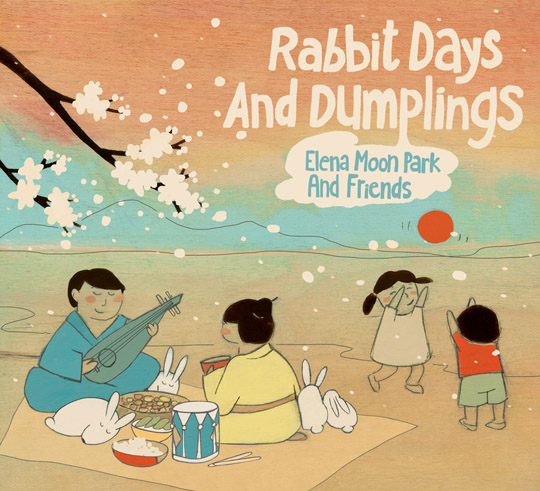
Elena Moon Park, a key player in the Dan Zanes and Friends ensemble, recently released her debut children’s album, Rabbit Days and Dumplings, which also won her a 2012 Parents’ Choice Award. Released through Festival Five Records (a label started by Dan Zanes in 2000), Rabbit Days and Dumplings takes us on a picturesque retreat, delivering a carnival of sounds from East Asia (Korea, Japan, China, Tibet and Taiwan) that have been reinterpreted and translated into a beautiful array of songs. No plane tickets necessary!

Rabbit Days and Dumplings is a personal album built on Park’s exploration of her own cultural roots while also capturing “songs, styles, traditions, languages, instrumentation, stories and feelings.” Park further explains, “It’s a reflection of conversations with friends, learning about the songs they listened to growing up and the songs that linger in their memories.” Park, a Korean-American born in East Tennessee, pays tribute to both sides of her heritage by mixing traditional American folk music with traditional Asian sounds and vocals. Renowned collaborators such as the masterful Wu Man, Jean Cook (a violinist who plays with Elizabeth Mitchell & You Are My Flower), popular Tibetan singer/songwriter Techung, members of Bang on a Can and the Kronos Quartet, to name a few, are featured throughout the album further contributing to the authenticity of the cross-cultural landscape that makes up Rabbit Days and Dumplings.

A majority of the songs are sung in their native tongue, but include enough of the English language, making it accessible to a wider range of listeners. Although, it’s the Asian languages that my 3 year old is most intrigued by and tries to sing along with. Specifically, one of her favorites is, “Si Si Sima,” a Tibetan jump rope song introduced to Park by Techung, who just released his own collection of family music. Before my daughter knew much about the song, she would dance to it while alternately hopping on each foot. Coincidence? Possibly, but the song motivates her to move to the sound as if she is reenacting the experience. We usually end up playing the song 6 or 7 times before she is ready to move on, but each time she hears it she exclaims “Listen to me sing it, Mama!”

The album opens with “Sol Nal,” which prompted the making of Rabbit Days and Dumplings. This joyful song describes the many celebrations that happen around the Korean New Year. It is led by Park’s powerful vocals and backed by some of the members from Dan Zanes and Friends.

Some of our favorite songs, in addition to the aforementioned “Si Si Sima,” include “Diu Diu Deng,” which features Dan Zanes on banjo and a fantastic solo by Wu Man on the pipa (a plucked Chinese string instrument). The song is about a train chugging into a tunnel as droplets of water fall from the ceiling onto the roof of the train. I particularly love the layering of English and Chinese vocals towards the end of the song.

“Poong Nyun Ga,” one of my favorites on the album, features steady drumming from the Korean Traditional Marching Band of New York, trumpets, an accordion, a mandolin and a piri (Korean reed instrument) that mixes perfectly with the joyous crowd of voices that triumphantly sing in hopes of an abundant year (in the name of a plentiful harvest or good luck in general). The vibe of the song is infectious and I can’t help but clap and sing along every time I hear it. Of similar sound is the brassy New Orleans style of “Diu Shou Juan,” a Chinese song that typically accompanies a children’s game called Drop The Flag. Sung in Mandarin and English, “Diu Shou Juan” is an excellent example of Park’s ability to create a beautiful union of Eastern and Western cultures.

Elsewhere, we get to hear Zanes and Park sing together in “Akatombo.” The definition of the title means “red dragonfly” and the song reflects on memories of a past time. It’s a beautiful song in which we get to wholly experience the depth of Park’s gorgeous voice. Paired with Dan Zanes’s soft, signature rasp, the song is quite moving.

Winding down the album, Park also gives a nod to popular Western music with “Summer is Here.” The song’s composition reminds me a little of Neil Diamond’s “Sweet Caroline” for some reason (which, to me, isn’t a bad thing at all). It’s a charming song based on Park’s experience growing up in Tennesee, hiking through the mountains and eating kimbap, a food that resembles sushi. “Tinsagunu Hana” completes the album with an offering of gratitude for all the hard-working parents, including Park’s own, as she sings “…although we number all the stars in the sky we cannot count our parents’ words of advice.” Listening to this and thinking about all that I have learned as a parent myself I can’t help but think, “isn’t that the truth!” Although, I am going to make sure to play this one for my Mother, as well.

I am truly impressed by the work that was put into making the album. Highly recommended for all ages. Rabbit Days and Dumplings is a timeless classic and one that fully supports Park’s strong belief that music has the ability to transcend borders, ages, languages and backgrounds.

The album contains beautiful illustrations by Kristiana Pärn while the liner notes provide snippets of song lyrics, Asian script, phonetic representation and English translation, which makes it fun to follow along. Below is a sampler containing five songs from Rabbit Days and Dumplings. You can also find song lyrics and backgrounds for most songs on the album here.

The album can be purchased from Festival Five Records, as well as the other usual outlets. A portion of the proceeds will be given to DonorsChoose.org to support creative education in our schools.

Full Disclosure: I was given a copy of the album for possible review, however, the opinions and thoughts expressed throughout are my own.

Check This Out: Welcome To The Village – Aaron Nigel Smith

“Welcome, we wish you peace. Welcome to the village, share a song with me.” Those few words speak volumes on Aaron Nigel Smith‘s latest release with One World Chorus, Welcome to the Village, where over 300 children sing renditions of songs from greats like Bob Dylan, Bob Marley, The Beatles, Jewel and Louis Armstrong. Incorporating an eclectic mix of reggae, classical, world and american folk music, among others, Welcome to the Village welcomes families into a cultural celebration of love and gratitude for the things we have and the people around us.

Welcome to the Village is Aaron’s first release with the children of One World Chorus, a non-profit organization committed to using music as a mechanism to “build bridges” for children, both in the United States and abroad. Aaron and his wife, Diedre, co-founded the chorus in 2009. Over the course of the last couple of years, Aaron spent time traveling around the U.S. between Portland, Oregon, Los Angeles, New York City and all the way to Nairobi, Kenya where 30 kids from the Cura Orphanage participated in the recording of this album. The Cura Orphanage is a special place that offers residency for children who have lost their parents to AIDS. Proceeds from the sale of Welcome to the Village will be donated to the orphanage in hopes of building sustainable music and programming.

Aaron carries an extensive background in music and movement, which began while he studied and performed with The American Boychoir School at age 11. Seeking out his passion and love for music, Aaron along with his wife Deidre, founded FUNdamentals of Music and Movement in 2002. FUNdamentals of Music and Movement serves as a music program for over 100 early education centers nationwide.

As much as it is quite evident that Aaron is a talented musician and songwriter, he has also done an excellent job of selecting songs for Welcome to the Village. On a couple of the songs, Aaron brought in fellow friends and highly acclaimed kindie artists for some sweet collaborations. Starting with a rendition of Bob Dylan’s “Man Gave Names,” Laurie Berkner, Lucky Diaz and Secret Agent 23 Skidoo, each join in as an animal while adding a touch of their personality to the mix. There’s even perhaps a subtle reference to Blue Bear as Lucky sings “…great big furry back with blue hair.” But the real showstopper is when Skidoo jumps in with a quick lyrical jaunt about a Platypus which blew our minds! This strange creature has been of particular interest to my daughter lately. Prior to hearing this song, and in just a few seconds, Skidoo schooled us with way more eloquence than I could have managed. It’s an exciting and well-thought out rendition of this classic, oft covered song.

“Grateful,” one of the originals on the album, features Dan Zanes. The song will warm your heart with Zanes’ Dylan-esque vocals encouraging us to give our “friends a big hug for all that they provide.” It’s oozing with sincerity and appreciation for the people around us, the beauty of the planet we live on and the air we breathe. The song is a prime example of Aaron’s talent to write and compose a deeply meaningful, authentic song.

But the true authenticity in Welcome to the Village is of course, the voices of the children, including Aaron’s duo with his son Zion on the Beatles’ cover of “Mother Nature’s Son.” In fact, it was Zion’s idea to sing the song and include it on the album. There are also traditional African songs which include rhythmic, multi-layered percussion, signature to the sounds of that culture. It’s actually these songs that my 3-year-old likes the best. Starting with “Fanga Alafia,” Em’s absolute favorite and one that she sings on her own even after the album is over. And, when I don’t sing the correct pronunciation (in her opinion) she is quick to correct me. There is also “Che Che Cole,” a fun call and response song to which Em immediately participates as if she’s part of the chorus, while Aaron calls out and the children respond masterfully. The album ends with a traditional choir song called “Siyahamba” which can be translated into a song about unity and peace.

Other notable songs include a slowed down, Dub style rendition of Jewel’s “Hands,” which features the kids from the orphanage. The song fits in nicely with the sentiment behind Welcome to the Village as it was meant to provide hope in the face of misfortune. The song is led by a female soloist whose voice is similar in pitch and tone to Jewel’s. The hauntingly beautiful rendition brings me chills as I hear the innocence and emotion of the children’s voices. There is also the educational “In A Book,” an educational reggae song written by Aaron, featuring his son Zion, as a soloist, along with the kids from the chorus spelling out words. For example: Aaron: “It’s in a book .” Chorus: “That’s right, a b-o-o-k.” Even if your little one can’t quite spell yet, he or she is given the opportunity to learn while singing along with these simple lyrics.

My personal favorite happens to be “Sound the Trumpet” which features Aaron (and a male vocalist from the chorus) flexing his operatic muscles on this short, classic piece. I pretty much just love to roll my r’s along with the guys and pretend I actually am an opera singer.

Welcome to the Village is a true reflection, regardless of age, who, what or where you are, you can experience and participate in the joy of music. Not to mention children love to hear other children sing and Aaron is no stranger to making quality music for families. In addition to being a father of two sons, who both appear on this album (as soloists and part of the chorus), he has received various parenting awards for his first two releases Let’s Pretend and Everyone Loves to Dance. He has also appeared on the PBS Kids Emmy Award winning show Between the Lions and is featured on several new Music for Little People releases, including Buckwheat Zydeco’s Bayou Boogie, and World Travels.

Music is fulfilling, brings people together and is meant to be shared. This is exactly what Aaron and the children of One World Chorus bring with the release of Welcome to the Village. In Aaron’s words, “When kids sing together, I hope that they enjoy sharing the gift of music and learning a valuable discipline that can be used to promote positive change in the world. It’s great to see the light in kids’ eyes as they realize just how many other kids are participating in the project.”

On this album, it literally took a village and then some, to create this special treasure. So kick off your shoes and stay a while; you won’t be disappointed. Ages 2 – 5 will enjoy learning, singing along and participating in the album.

See below for videos related to the making of Welcome to the Village.  You can learn more about and support One World Chorus here, as well as, the Cura Orphanage Home here.

Digital samples and downloads can be found on Amazon. The album is also available for download and purchase on iTunes.

[Courtesy of YouTube]

Disclosure: I received a copy for possible review and was overjoyed to provide my honest opinion regarding the album.

Putumayo Kids, LeapFrog and Pictures!

Ok, I admit it, a huge motivation for me to drive 30 minutes and pay close to $40 on admission for our local Children’s Museum is because they have a dance room which plays nothing but Putumayo Kids albums. And even though said museum is a great playground for those that toddle, we spend most of our time movin’ to eclectic compilations as they come to life through surround sound speakers. Of course, trying to catch the moving lights on the floor and sparkles from the disco ball is fun too, but it’s all way more colorful when you are surrounded by world beats.

So, I am pleased to announce that Putumayo Kids is partnering up with LeapFrog and will release 4 of its award-winning full-length Playground CDs exclusively from LeapFrog’s App Center (http://www.leapfrog.com/en/appcenter.html) for Leapfrog’s LeapPad1 and the recently launched LeapPad2 and LeapsterGS.

Three of the four digital releases, European Playground, Jazz Playground and Cowboy Playground, are now available at the link above. The fourth upcoming release, World Sing-Along, includes two songs featuring Dan Zanes, as well as, Frances England’s “That’s What Friends Are For” (originally featured on the Many Hands: Family Music For Haiti release from Spare the Rock Records).  Children from Pihcintu Multicultural Children’s Choir, which features refugee girls mostly from war-torn regions, will sing “Around the World” to close the album. The release will be made available to the general public on October 30th and through the LeapFrog App Center on November 6th.  You can enjoy a free preview the album through the Bandcamp widget below.

Putumayo World Music will contribute $5,000 from sales of World Sing-Along during the period October 2012 through October 2014 to Population Services Internation (PSI) in support of its Five & Alive® campaign to ensure that all children have a healthy start to life, no matter where they are born. For more information about PSI, please visit www.psi.org.

Putumayo is also pleased to offer its first photography calendar, Children of the World, featuring images of children from Africa, Asia and Latin America by renowned photographer Jon Kaplan. Ten percent of Putumayo’s sales of the calendar (available October 1st), will be contributed to Seva (www.seva.org), a nonprofit organization which builds sustainable health programs that serve vulnerable populations around the world and help end preventable blindness, that has restored eyesight to more than 3 million people.

Sneak Preview: Blue Clouds – Elizabeth Mitchell and You Are My Flower

Elizabeth Mitchell is on a roll, just coming off of a tribute to Woody Guthrie, and now with an upcoming release in October called “Blue Clouds.”

“Blue Clouds” is another Smithsonian Folkways release and it is sure to be yet another beautifully arranged album.  With some originals, renditions of traditional songs and covers from David Bowie, Van Morrison and even Jimi Hendrix I’d say we’re in for a treat.

Below is a sneak preview of a few songs from the album, which includes the Bowie cover “Kooks”, a rendition of “Froggie Went-A-Courtin” and the title track “Blue Clouds,” a lullaby written by Daniel Littleton (Mitchell’s husband) for their daughter Storey when she was 3 years old.

Sneak Preview – Listen to Selections from Blue Clouds

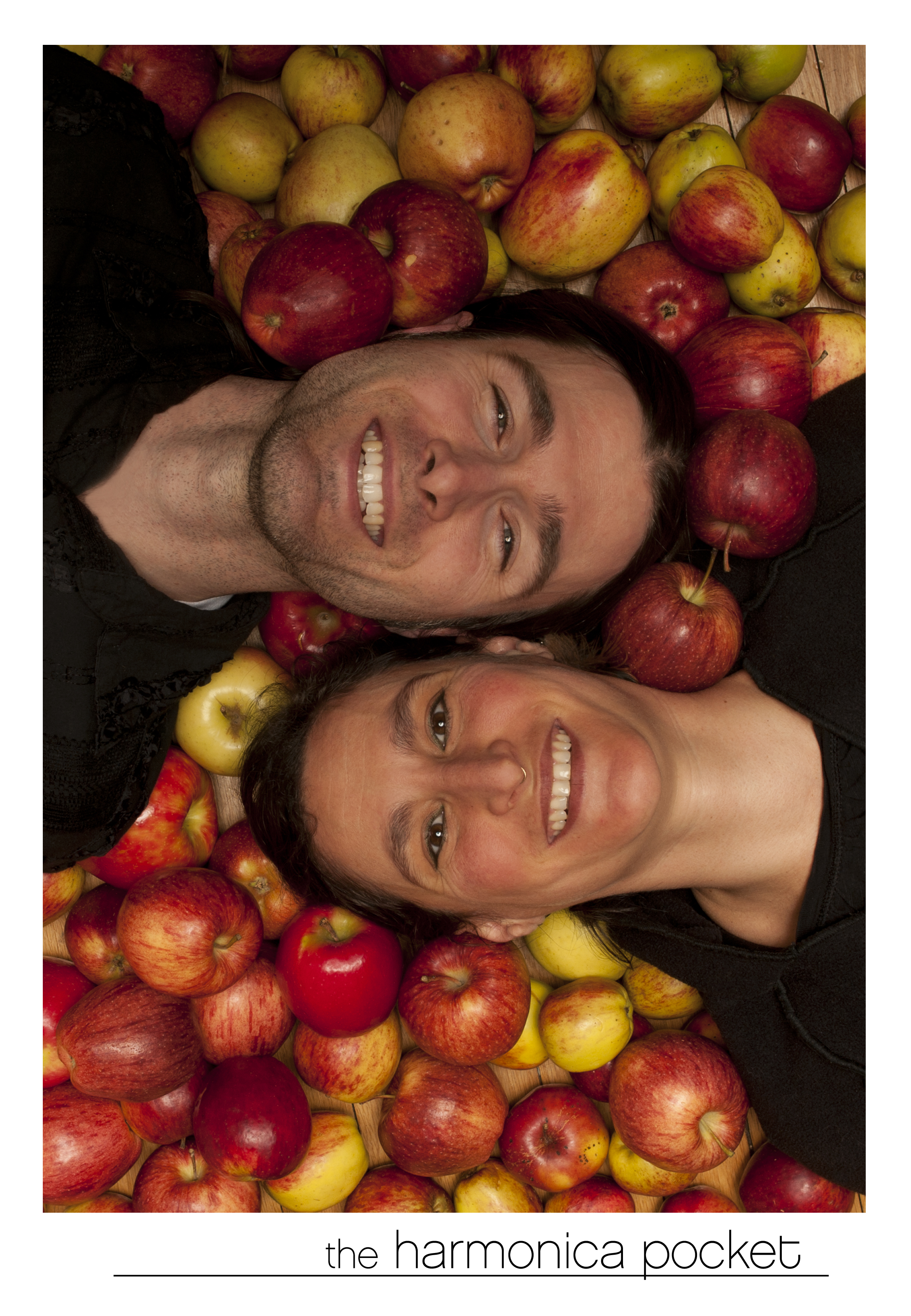
Check This Out: The Harmonica Pocket – Apple Apple

Fall is approaching and that means beautiful colors, cozy sweaters and delicious apples. What better way to celebrate the upcoming season than with a new release from The Harmonica Pocket.

Apple Apple, the third children’s release from The Harmonica Pocket, is a melodic dream. The eloquence with which the words and instrumentation flow throughout the album leave you feeling like someone just whispered a gentle lullaby in your ear. It’s very sweet and the stories these songs tell contain simple words and familiar concepts which the wee ones should easily identify with.

The Harmonica Pocket is primarily made up of Keeth Apgar (main vocals, master songwriter, multi-instrumentalist) but also features a regular group of folks, one of which includes partner, Nala Walla, who delivers rich harmonic vocals throughout the album, as well as, fellow Seattle-based Kindiependent artists such as Johnny Bregar (banjo), Jack Foreman from Recess Monkey (bass throughout) and Caspar Babypants (vocals). The recording of this album, as well as their previous albums, took place in a solar powered studio on a tiny island in Puget Sound, Washington.

Many of the songs on Apple Apple are like poems, with each line complementing the one before it. What I particularly love about the album is how it plays with linguistics, character development and timing. The songs are multi-dimensional, containing carefully paired lyrical and musical melodies. The instruments in many of these songs are just as important as the words, often times acting as another voice with the pluck of a chord or the warm, rich tone of the saxophone at just the right time. They even serve to heighten a climatic moment within a song just by a change in time signature. A great example of this is in “Afraid of Heights,” a beautiful song about a bird who comes out of its shell and is afraid to fly. The song starts in 4/4 time and makes a transition to 3/4 time when the bird sees the sky, faces its fears and flies. It’s this simple change that evokes a feeling of exhileration that comes from overcoming your fears, just as the little bird did.

The sentiment behind Apple Apple is somewhat different than the previous, highly acclaimed “Ladybug One” as both Keeth and Nala have become parents. As a result, several of the songs, i.e. “Diaperman,” “Monkey Love,” “Reflections” and “Little Baby,” to name a few, are inspired by this new development. The songs carry a calming, chilled out vibe with some notes of folk, jazz, pop and even some reggae.

Conceptually, there is also this notion of experiencing life “naturally” and having that be the driving force behind the creative process. A great example of this is the smooth, jazzy little song “Bare Feet,” which was inspired by Apgar’s personal experience with climbing trees as a child (and somewhat occasionally as an adult). The song describes kicking off your shoes, climbing a tree with bare feet and observing the feeling of the bark, the wind blowing, as well as, looking with wonder at the birds and the leaves on the trees. I love the lyrics “Kick off my shoes/Pull myself up by my own hands/A breeze blows through/Everything moves and we slow dance/Above me only clear blue sky/So good to be outside/I forget sometimes/That I need to play/Everyday/…And all I need are my bare feet/climbing up to the top of this apple tree.”

In addition to apples, the album covers a variety of topics. There is counting in “I’m Gonna Count” which invites listeners to count stones on the beach by single digits (1, 2, 3), leaves on the trees by even numbers (2, 4, 6, 8) and stars in the sky by 5’s (5, 10, 15, 20…) and syllabic playfulness in the title track “Apple Apple” where each word is broken up and sung with one syllable. It’s a great game to play with the actual lyrics of the song, but also in making up your own words. It’s always good for a few laughs.

Em particularly gets a kick out of the baby tooting in “Little Baby” and laughs with a slight squeal after waiting for it. She knows it’s coming and waits in anticipation with a smile, repeating “just wait, it’s comin’ up, it’s comin’ up, the baby’s gonna toot!” until she hears it.

Other notable songs include one of our favorites “Monkey Love,” features Caspar Babypants as Monkey two. The song basically uses the word Monkey repetitiously to tell the tale of three monkeys who come together and become a family. “Monkey one Monkey two Monkey three/Monkey me Monkey he Monkey she/ Monkey love Monkey we Monkey be family….” “Turkey in the Straw,” one of my personal favorites, is a slowed down rendition of the original with a funky kind of groove.

Rounding out the album are some slower songs which make perfect lullabies and embody the love that Apple Apple was premised on. ‘Reflections,’ for example, was written while Keeth was out walking with his son, sometimes in the middle of the night or early in the morning, to help him fall asleep. I think most parents should either relate to or remember this very vividly.

Apgar, along with the rest of The Harmonica Pocket contingent, create a rich environment that carries the message of love, acceptance, wonder and respect for the world around us. Apple Apple is sure to be enjoyed by the 0 – 5 crowd and their grown-ups. Without a doubt one of our favorite albums of the year so far. I encourage all of you to tempt your palate and take a bite out of this record. It will absolutely satisfy your “aural” taste buds.

Copies of the album are available at CDbaby.com and KidzMusic.com. Individual songs and album downloads can be found at the aforementioned sites as well as iTunes, Amazon.com, Rhapsody.com, eMusic, Spotify and many other digital download stores.

You can also “look inside” the album here, find lyrics and read about the songs’ stories here. Highly Recommended.

Below you will find a clip for the reggae influenced “Happy Mother’s Day,” as well as, a video for the silly yet heroic tale of “Diaperman.”

“Happy Mother’s Day”

Diaperman [courtesy of YouTube]

Full Disclosure: I received a copy of the album for possible review. The thoughts and opinions expressed in this review are based solely on my honest opinion.

Check It Out: Elizabeth Mitchell – Little Seed: Songs for Children by Woody Guthrie

July 14, 2012 marked the 100th anniversary of Woody Guthrie’s birthday and just a few days before that Smithsonian Folkways released ”Little Seed: Songs for Children by Woody Guthrie” by Elizabeth Mitchell, the only CD of Guthrie’s children’s songs coinciding with the Woody Guthrie Centennial. This is Mitchell’s third release from the Smithsonian Folkways label and her sixth children’s album to date. “Little Seed” is a mix of 8 previously released tracks and 5 newly-recorded tracks by Mitchell which sound great laid out on one album together.

The songs covered on “Little Seed” stem from two of Woody Guthrie’s children’s albums, recorded in 1947, called “Songs to Grow on for Mother and Child” and “Nursery Days.” Like Guthrie, Mitchell is a folk frontrunner and icon in her own right, being the first female artist signed to the Smithsonian Folkways label and certainly one of the most beloved artists within the kid’s music scene. So it is with little surprise that Elizabeth Mitchell released a children’s album in celebration of Woody Guthrie’s life. And, while all of her music in the last 10+ years has been directed towards children and families, her sound is highly portable and could very well crossover into the adult arena without a snicker or sneer.

In comparison to the otherwise dusty recordings of the Guthrie originals, Mitchell brings color and life to her re-imagined versions on “Little Seed.” Not to mention she very easily glides through some complex tongue-twisting lyrics, which happen to remind me of a few Dr. Seuss books, making it even easier to follow along than some of the originals. Mitchell’s voice is soothing and clear like a serene lake and refreshing like a cold glass of water on a hot day.

“Little Seed” contains regularly covered classics like “Riding In My Car” which features Mitchell’s niece’s sweet little voice singing along and laughing about a frog riding in a car, and “Bling Blang” which is brought to life by the upbeat rhythm of some chest thumps and knee slaps. There is also an ode to the wonderment with which a child experiences while riding on a carousel in “Merry Go Round” which personifies the experience of riding a pony and reels us into the innocence and wonder of a child’s imagination. The lyrics so sweetly and vividly bring the pony to life as Mitchell sings /come lets rub the ponies hair…/now let’s climb on the ponies back…/pick up my reins and buckle my straps…/it’s faster now my pony runs/up to the mooon and down to the sun/my pony runs to the music and drums/around and around and around/now he runs as fast as the wind and gallops and trots and dances a jig/ my pony is tired and wants to slow down/around and around and around.

Mitchell is not alone in the arrangement and production of this album. As in previous albums, her daughter Storey and her husband Daniel Littleton join in with additional vocals and instrumentation. I particularly like the dimension Littleton’s voice adds on “Why Oh Why” and his guitar solo on “Who’s My Pretty Baby,” which happens to be a beloved Elizabeth Mitchell classic in our home.

Additional artists like Dean Jones from Dog On Fleas, as well as Clem Waldmann, a recognized percussionist from Blue Man Group and his wife Kristen Jacobsen also join in broadening the depth of the sound, further bringing Guthrie’s songs to life. The addition of the the balafon, played by Dean Jones, and the flute played by Clem’s wife Kristen Jacobsen in “Sleep Eye,” one of my favorites on this album, brings a playful element to the song. Also notable is Clem Waldmann’s percussive accompaniment on “Rattle my Rattle” which is funky and adds more space to the updated version; whereas Guthrie’s version feels slightly more rushed in order to keep up with the complexity of his own words and much like a baby shaking a rattle.

“Little Seed” was a sentimental project for Mitchell as the discovery of Guthrie’s children’s album “Songs to Grow On for Mother and Child” is what inspired her to start making music for children. She has done an excellent job of capturing Woody’s sweet, loving and sensitive side in her celebration of his life.

The album is 29 minutes long, available for purchase or download through Amazon and is packaged with 20 pages of liner notes containing snippets of lyrics and beautiful photos of Mitchell and her family; it’s a beautiful keepsake for already devoted fans, as well as, newcomers. The booklet also contains a bit of historical fact and references for literary works that have been published on Woody, as well as the song “This Land Is Your Land.” Mitchell not only includes this song on the album, even though it was not intended to be a children’s song when Woody first wrote it, but makes a point of singing three verses that are often left out in more recent versions of the song.

Should you wish to download the album and liner notes, you can find them at the Smithsonian Folkways website, which also offers the option to buy the CD. Either way, it’s an excellent sampler which will invite your family into the beautiful world Mitchell creates through her music. These are classic little ballads that should be passed down (and most likely will be) through generations, as Woody’s songs have thus far.

Recommended for ages 0 – 5, however, older ones will most likely enjoy trying to keep up with Mitchell as she sings some of the quick repetitive verses.

Below is a video released a while ago created for an HBO animated family series.

Grassy Grass Grass [courtesy of YouTube]

Check It Out: Randy Kaplan – Mr. Diddie Wah Diddie

Oh yeah, it’s time for another Randy Kaplan release! Randy is a regular listen at our house and his latest release, “Mr. Diddie Wah Diddie,” has been played so much that we have now started referring to him on a first name basis. As in, “I want Randy, Mom!”

Mr. Diddie Wah Diddie, recently awarded a 2012 Gold Award from NAPPA (National Parenting Publications Award) and included in People Magazine’s “8 Cool Kids’ Albums Now!” is Randy’s fourth not-JUST-for-kids release and probably our favorite to date.  The album is a period piece of sorts in which Randy brings us the blues! And boy am I a sucker for the blues. On this album we are taken on a journey through the great musical heritage of country blues and ragtime from the 1920s, 30s and 40s and actually taught a thing or two about the masters who made up the genre.  Some of the most mysterious and wildly talented bluesmen and women are covered here from the likes of Robert Johnson, one of the most influential artists of his time to Muddy Waters, Blind Blake, Blind Boy Fuller, Bessie Smith and Elizabeth Cotten whose “Freight Train” was covered on Randy’s first kids album, “Five Cent Piece.” So, although Randy has dabbled in the blues before, we now get to experience a full-length celebration of one of the greatest periods of music. And it’s fantastic!

Various segments of the album are introduced by the craggy voice of Lightnin’ Bodkins, a blues historian extraordinaire who got his blues name because he was a lightning fast knitter back in his day (emeritus president of the Mississippi Mitten Guild, to be exact). Lightnin’ not only provides tidbits of history and sources for each song that Randy covers on the album (both in-between songs and throughout the liner notes), but also participates in some comedic interplay as he tries to cajole Randy into having a blues name for himself. Lightnin’ gets pretty crafty as he strings together hilarious combinations based on things like pools (“Chlorine Kaplan”), breakfast food (“Papa Waffle Kaplan”) and even goes as far as creating a formula based on ailments + fruit + a president of the United States to produce Chicken Pox Kiwi Cleveland, for example.

Randy’s talents lie within his ability to recognize other artists’ talents and successfully blend them together with his own. On Mr. Diddie Wah Diddie, the sound of the original songs is mainly intact with the addition of Randy’s masterful storytelling, as well as, accompanying instruments such as drums, bass, trombone, tuba, banjo, mandolin and even a washboard, giving the songs more depth and in some cases a jazzy New Orleans type of feel. Additionally, kids play an integral part in bringing some of these songs to life, adding some serious laugh out loud moments as they interject, inquire, make irrational demands, shake their tushes and even yodel along with Randy. There is even an inquisition in the song “In A Timeout Now” in which a girl from the chorus challenges Randy on whether timeouts existed when he was a kid by asking “aren’t you being anachronistic?” It’s basically an example of Randy’s approach to making kids music. He plays it straight, assuming kids are capable of understanding a lot more than we might expect.

Opening the album is a fiery Robert Johnson ragtime number which Em refers to as “the tasty song.” “They’re Red Hot” is a fast paced ragtime jig with a catchy chorus “Hot Tamales and They’re Red Hot” that will get you and your family up and moving as if you just ate some hot tamales.

There are several songs about bullies which provide enough of a message to kids about the consequences of being mean. “In A Time Out Now,” adapted from Jimmie Rodgers’ “In The Jailhouse Now,” does an excellent job of drawing a parallel between timeouts and being in jail. The song features a troublemaker named Carl who is constantly trailed by his Mom and consequently gets “throwed in the can” for tormenting Randy and his friends. “You’ve Been a Good Ole Wagon”, a Bessie Smith tune, features some hubris on Randy’s part as his 10-year old self defends his right to help a girl in his class with her math homework by referring to a bully as a metaphorical wagon who is past his prime (which was his single digit years). As a result, the bully starts to fake cry and, as Randy says “he let out a counterfeit hoax of a howl and a dissembling invention of attention.” And then there is a Blind Blake inspired tune called “That Will Never Happen No More” featuring Denise, a childhood tormentor whom Randy was in elementary school and sleepaway camp with. In this song, Denise comes up with ways to terrorize Randy including giving him lice and dropping a bowling ball on his big toe.

Other notables songs include “Ice Cream Rag”, a rag about getting the Ice Cream Man’s attention in which Randy comes up with a plan to do a dance called the “Pigeon Wing” which he is sure will not only capture the Ice Cream Man’s attention but may just crown him the Official Ice Cream King. Not only does the song feature some tap dancing but we get to hear some mighty fine scat singing along the way.

“Green Green Rocky Road” is a sweet, sweet Dave Van Ronk inspired song in which Randy asks the chorus of kids who they love. As Randy sings “Green Green Rocky Road/ promenade in green/ tell me who you love/ tell me who you love,” the kids reply with things like their dog, Dad, brother, pet bird, and even piano teacher. It’s a perfect song to engage in with your kids and what better topic to discuss than those you love.

Finally, “Black Mountain Blues” is a creative song about a land where babies cry grape juice tears and it’s illegal for cats to sharpen their nails. I happen to personally know two cats who wouldn’t live a free life if they found themselves on Black Mountain, ahem. Kids are also able to make irrational demands and are prompted to dole them out at the end of the song and they gladly do with things like wearing shorts in the snow and even having the power to have all the powers in the world.

Randy Kaplan has made quite a name for himself in the kindie music scene. With his serious storytelling chops and musicianship, he has won over both kids and adults alike. In my mind, Randy is a pioneer who is able to tackle a wide range of styles from broadway to blues underscoring the fact that he is one of the most versatile and creative voices in kids music today.

Mr. Diddie Wah Diddie is being released by MyKaZoo Music and runs for about 1 hour containing 17 songs with 7 segments featuring Lightnin’ Bodkins. The CD contains 20 colorful pages of liner notes giving kids more information on what they are listening to, and features Randy posing as some of the great bluesman he pays tribute to, creating a pleasing visual element to tie it all together.

I could totally see this as a Vol. 1 and Vol. 2 series but I will gladly take the full-length of Mr. Diddie Wah Diddie for now. Very highly recommended and appropriate for kids ages 3-10, but adults may just find themselves reaching for a listen without their kids.

As the almost eponymous title track suggests, listening to this is good for your health and will put a spring in your step.

You can preview the album on Randy’s MySpage page here, as well as download and/or purchase Mr. Diddie Wah Diddie from Amazon.

Full Disclosure: I received a copy of this album for review.