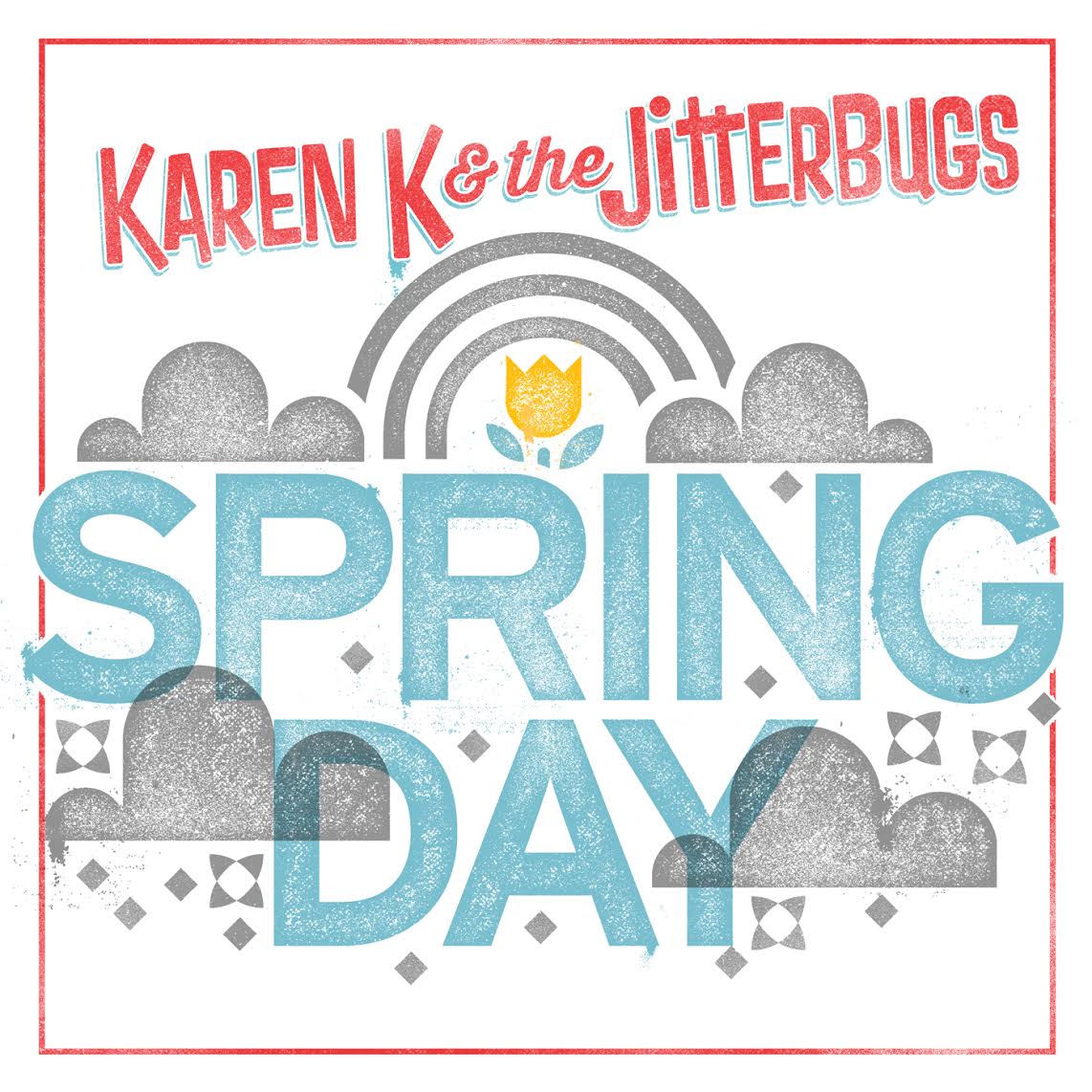
World Premiere Clip: “Spring Day” – Karen K & the Jitterbugs

unnamed (1)

What is there to do when it just keeps snowing? Write a song about Spring, of course!

Even though I’ve been living on the West Coast for the past few years, I am still not completely adjusted to sunny, warm winters (though I’m not complaining either). When I hear from friends and family on the other coast that it is snowing AGAIN, I feel as though I am on another planet. As a former snow bunny, I can sympathize, though I do miss the beauty of the falling snow and monster-sized snowflakes.

Karen Kalafatas of Karen K & the Jitterbugs has a different take on the allure of a freshly painted powedery landscape, especially after being stuck inside for the last 4 months. But her spirits are up and her creative juices are flowing!

Today’s audio premiere, “Spring Day,” is an anti-snow, pro-sun anthem eager to welcome Spring and hang outside with a cool glass of ANYTHING!

Stay tuned for the video for “Spring Day,” though Kalafatas explains that they will need a few Springtime shots for that.  Says Kalafatas, “So basically August.  August is when we’ll get the Spring shots.”

“Spring Day” is available at iTunes, CDBaby and Amazon


Screen-Shot-2015-03-13-at-11.36.35-AM

Karen K (aka Karen Kalafatas) is a writer and performer along with her band Karen K & the Jitterbugs.  A winner of a Parents Choice Award and “Best Kid Vid of 2014” for her YouTube Smash hit (I Woke Up in a) Fire Truck, Karen and her Jitterbugs tour the country performing her original songs and delivering a rockin’, energized, theatrical show to kids ages zero to one-hundred-and-three.  They’ve been seen on CBS-New York and in the Boston Globe, Boston.com, the New York Times and New York Magazine.  Karen is also the founder and producer of Kids Really Rock family music festival at the Lawn on D in Boston.

For more information, visit http://www.karenkjitterbugs.com

Interview: Jeff Krebs (Papa Crow)

unnamed (1)

Kids are very sensitive and honest. They want to be engaged more than entertained or simply sung to.

Jeff Krebs, aka Papa Crow, is a Northern Michigan singer/songwriter. Krebs plays acoustic folk that is gentle and charming. Since 2011, Krebs has produced 4 albums,  2 of which are Ep’s. His latest full-length release, Full Moon, Full Moon is his most personal collection yet as it represents his family, where he lives and even carries on a special legacy from his grandfather.

In our interview below, Krebs talks about his grandfather, how his sons inspire his songwriting, why you have to be on your toes when performing for kids, where the name Papa Crow came from, and his new EP.


KCG: How did the concept for Full Moon, Full Moon come about?

Papa Crow: As I began writing songs for Full Moon, Full Moon, a nature theme began to form. Specifically, a north woods theme. These themes represent my family, where I live, where my family is from, and where we’ve been. The song types and their sounds reflect a lot of the old time music that I was raised with going back past my grandfather’s time. As I started to move songs in order, I found that I had a daytime section of songs and a nighttime section of songs which worked well together and nicely added up to a day in the life: from sun up to sun up.

Where do you draw musical inspiration from?

My family is always a big inspiration for me. My two sons, along with my nieces and nephews, sang on this album. I also rely heavily on my brother-in-law for a lot of bass tracks, keyboards, slide guitar, and accordion.

Inspiration comes to me from friends as well. Aaron Kippola, who plays drums on the album, ended up using his saxophone on a song called “Moving to the Beat.” I just said “Let ‘er rip” and he played an improvisational solo which we ended up choosing on the first take. As I hear different sounds in my head, I figure out how to accomplish them in a recording, and I really love when Aaron plays the sax.

Your previous album titles are similar in that they refer sounds, i.e All The Things That Roar and What Was that Sound?. Full Moon, Full Moon strays from that pattern a bit though there are songs related to the effects of sound as in hearing your own rhythm in “Moving to the Beat.”

Are you inspired by or more sensitive to sounds when you are writing songs?

I hadn’t really thought about how I use sounds, or how I use words related to sounds before, but I do see the pattern you are describing. I am pretty sensitive to sounds around me. I can either fall in love with loud noises or I am repelled by them. I’m always seeking out sounds that will carry a song in the best way. “Outside Sounds,” is completely about sounds and it’s one of my favorites.

Did you capture any outside sounds on your recordings?

In the summer, there are a lot of noises going on by the insects and the animals. While I was recording at my camp, a cottage where I record, I stuck a microphone out the window and turned up the volume. I used a little bit of that recording at the end of “Outside Sounds.” It’s amazing how many sounds you’re not conscious of when you’re walking around. You can’t be. You have to tune some of them out. But, there is so much going on when you sit quietly, and really listen.

On “Over the Rooftops,” I include the sounds of kids playing at the end of the song. My two boys were playing with another girl and boy at our camp. I wanted to capture the sounds of them playing so I just turned on the iPad and recorded them. I will always remember that day at camp because it’s on the album.

Are there songs on Full Moon, Full Moon that were inspired by your childhood?Full-Moon-Full-Moon

“Daylight in the Swamp” is a family song and something we say at camp all the time. We wake up early to
go into the woods, and it’s daylight in the swamp. I wrote that song about 5 years ago as a little instrumental for my family band, and we still play it whenever we get together.

For Full Moon, Full Moon, I added lyrics to “Daylight in the Swamp” and featured farm kids from a local 4H club called The Green Garden 4H Club. I knew I wanted to record with them when I first heard them playing on fiddles one day. I got together with 9 kids and their parents in a tool shed on one of the farms and recorded the reprise version of “Daylight in the Swamp.” It was a wonderful highlight for me.

You also included “The Michigan Waltz,” a song that your grandfather wrote. How did your grandfather inspire you musically?

My grandfather, Bill, was my main musical inspiration when I was young. I had been listening to him play since I was a baby. He wasn’t a professional musician, but he was a good one, and always played at family gatherings. If there were community events he would always have his ukulele or guitar out, and his kazoo, ready to entertain everyone. He used to sing a rendition of “You’re Bound To Look Like A Monkey” to me as a child, and early last year I released my own rendition of that song and plan to include it in my next EP, Monkeylele.

When I was 4-years-old, he bought me a ukulele. It was a cute little red Harmony, and I have it hanging in my sons’ room right now. I loved that I was able to learn simple chords and still think the ukulele is the best instrument for kids.

My grandfather wrote “The Michigan Waltz” when I was a child, so I’ve been hearing it all my life. When I was deciding on the tracks for Full Moon, Full Moon, it felt like the right time to continue my family’s legacy. I recorded “The Michigan Waltz” just sitting down in front of a microphone and playing. It’s the only truly solo piece on the album.

Did your grandfather explain the meaning of  “The Michigan Waltz?”

He wrote it because he had heard songs about waltzes in other states. There’s “The Alabama Waltz,” “The Tennessee Waltz,” and “The Kentucky Waltz.” Those were famous songs when he was growing up, and he wanted to write a nice waltz about where he was from so he wrote “The Michigan Waltz.” It has always been my favorite song, and I just had to have it on this album. 

Did you grandfather write other songs?

He wrote about a dozen that we have recordings of. He also wrote some Gospel songs and some war songs about WWII. He was a very good songwriter which was inspiring to me because I knew even at a very early age that if he could do it maybe I could too.

What music did you listen to growing up? Did you have other musical influences?

I was obsessed with radio when I was a kid. My goal as a teenager was to get an electric guitar and to play in a rock band, which I ended up dong through college. I also listened to a lot of classic rock. I love Bob Dylan and Tom Waits. Joni Mitchell, Lucinda Williams, Peter Gabriel,  and the Beatles were huge for me. I have a big collection with Bob Marley, Grateful Dead, Ella Fitzgerald, Charlie Patton and Graham Parsons. I have also added a lot of kindie music to my collection in the last several years. I can name so many musicians that I just love. 

Later in life, the more I started writing, the more my sound kind of softened. I tapped into the music I learned from my grandpa, which was the traditional folk songs and the old standards. 

Did you have an adult career before you went into children’s music?

Yes, I have been writing since I was a teenager. I lived in California for a long time, traveling with a few bands. During that period, I released a couple of solo singer/songwriter albums. Right before my oldest son was born, about 6 years ago, I became interested in kids’ music. I first discovered Dan Zanes and Elizabeth Mitchell. Over time, I started to find a whole wide array of other children’s musicians out there that I really enjoy. Before long I was writing songs and making plans to do an album. Kids’ music has been my main focus ever since and it has been extremely satisfying.

unnamed (3)How did you decide on the name “Papa Crow?”

I like my name, but I wanted something easy for kids to remember. The name “Crow” was given to me when I was younger and spent some time in Nevada. I stayed with a medicine man and one morning he told me that my Indian name was “One Crow,” which has always stuck with me. Then, when my first son was born, I became a papa so that led to me becoming Papa Crow. The name has accomplished what I wanted it to because sometimes when I drop my kids off at school other kids will say, “Hey, it’s Papa Crow!”

Are there songs on Full Moon, Full Moon that are inspired by your
sons?

Both of my boys are very inspirational. The songs “Fireflies” and “A Billion Stars” represent how I feel about them. Sometimes I will incorporate things they say that are a little off the wall, but coming from a 5-year-old or a 6-year-old mind sounds fresh and interesting. I also use them for ideas and as sounding boards because it’s important that my songs resonate with kids. That’s what writing music for kids is all about. If I make a song, and they’re laughing their butts off, I know I have something. Kids aren’t shy. If they aren’t interested in what you are singing they’ll just walk away (laughs) so I have to keep them interested.

Do your sons have favorite songs?

“Full Moon, Full Moon,” “Moving to the Beat” and “Over the Rooftops.” They like to hear their own voices on “Over the Rooftops.” They always remember that whenever they hear the song.

Sometimes I’ll hear them singing one of my songs while they are playing together, and that will encourage me to want to develop the song some more and record it.

I also like to sing my own songs but put different, silly lyrics in them just to make them laugh, and they always like that. They’re very silly boys.

Frances England appears on “Give Some Get Some,” which is a really beautiful song in both sound and meaning. How did that collaboration come about?

Frances is one of my absolute favorites and we listen to her albums a lot in our house. She made an offer to sing on one of my songs. I took her up on it and we put the song together through email. It was a great collaboration, and I’m really happy that she’s on my album.

When you are writing songs, do you think about how your audience will react?

If I write a song, my next step is to play it live in front of families and kids, and see what their reaction is. I know my craft pretty well, but sometimes I feel the audience knows it even better. When I perform, I like to see how they respond because sometimes it’s in a way that surprises me. If a song doesn’t prompt a response, or if it ends up going gangbusters, I listen to the audience.

What do you like most about playing for kids and families compared to when you were touring as an adult. 

There are so many things. Kids are easier to engage with as an audience. You have to be on your toes.

Why do you think you have to be on your toes?
You have to be on your toes because kids are very sensitive and honest. They want to be more engaged than entertained or simply sung to. If I just sat up there and said “Here’s a song I wrote about xyz,” it may be interesting to them or they may decide that they’d rather be on the other side of the room coloring. When I do a show I do a lot of call and response, engaging the audience with a lot of questions. The kids enjoy it and sometimes I get ideas for songs from those exercises. Overall, I want the performance to be more of a community experience than a concert.

What indicates to you that a song might not work?

The audience’s lack of interest is a good indication. But, mainly, as an artist I try a lot of things and know that not everything is going to work out and be amazing. I let go of the songs I am not satisfied with and keep the ones I feel a connection with.

What have you learned from the first time you decided to make a kids’ album until now?

The people in the kids’ music community are such a welcoming group of musicians, writers, bloggers and radio people. I feel like I’ve found a home with my music in this community. As a whole, the community is making great music.

The community is very strong and supportive! Do you feel as though kids’ music has changed?

The genre keeps broadening, which is great, and I am always excited when something new comes along because it inspires me to think about my own music differently. When I discovered The Pop Ups that was something different and exciting. They have such a fresh take on children’s music. Red Yarn and Pointed Man Band have also produced some very unique albums that I love. There are many artists in this genre putting a lot of creative thought into making music.

Do you have other creative outlets besides music?

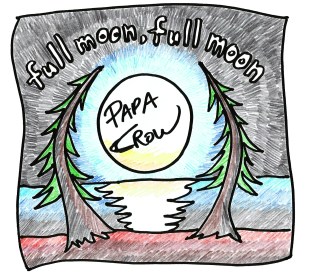
I draw the covers for my albums. When I draw the cover images, I imagine a simple coloring book with
black and white drawing, and then I color the pictures in with colored pencils.

The drawing I did for the cover of Full Moon, Full Moon came out as I was looking outside down by the lake. It is very much a Lake Superior scene, and what we see every day. We’re very blessed to live in this area because it’s so beautiful. There are so many great people and so many great activities. It’s very cold in the winter, but we live here because we love it. 

What’s next for you? 

papacrow4_largeI just released a new EP called “Their Heads Are Green And Their Hands Are Blue” which is based on the “nonsense” poetry of 19th century writer Edward Lear who is most well known for “The Owl and the Pussycat.”

My next EP, Monkeylele, will be mostly covers, and I’m planning on doing an Alastair Moock cover on it. I really like Alastair! I enjoy doing little 5 song EP’s because I think they are nice for kids’ attention spans. After the EP’s are released, it will probably be next year by the time I get another full-length album out.

Also, if Dean Jones is reading this I want work with Dean Jones. I love his music, and I think we could make good music together. I would really like make that happen somehow down the road.

Interview: Justin Roberts on creativity, writing music for Hansel & Gretel and upcoming residency with the New Victory Theater

justinroberts

“This is really about America and not necessarily just a story about some girl with bugs in her hair.”

Justin Roberts is a well known and loved kids’ musician. A two-time Grammy nominee, Roberts has been putting out hits since releasing his first album, Great Big Sun, in 1997. In 2014, Roberts expanded his repertoire and authored his first children’s book, The Smallest Girl in the Smallest Grade, and wrote a score for Hansel & Gretel: A Wickedly Delicious Musical Treat, which premiered at the Broadway Playhouse (Emerald City Theatre) in Chicago. This year, from April 25, 2015 to April 26,  2015, Roberts will be performing a concert with a theatrical storyline called “The Mysterious Hat” at the New Victory Theater

Our family has always enjoyed the power pop style of music played by Roberts and his band, The Not Ready for Naptime Players, however, it is Roberts’ songwriting that has always struck a deep chord with me. He is a gifted songwriter whose music is made more vibrant through the words and phrases he strings together. I always feel as though I can see exactly what he is singing about, i.e. “Nothing on You,” from his Lullaby album, likens a flock of geese to “fleeting notes and rests that stretch across the sky.”

As a writer, I am inspired by Roberts’ work as I too strive to provide a visual experience through my own words. In our interview below, Roberts shares his experience writing music for Hansel & Gretel, thoughts on creativity, and how true originality leads to success.


Kids Can Groove: You have expanded your repertoire over the past year, including writing music and lyrics for a musical. Did you read the script for Hansel & Gretel before writing the music versus seeing the scenes played out and then beginning the writing process?

JR: Ernie Nolan sent me pages of the script as he was writing it with spaces for songs. I could get a sense of the characters and the story line and write as I was following the story.

Did you have to work with the actors or direct them in any way to reflect the intonations you imagined for the songs?

Yes, we did a reading in July and I helped coach the singers on how to get the words across. Andrew Fox and I also did that in the studio when we were producing the cast recording.

Did you have to write songs conveying the emotion of a scene/capturing the moment versus what a character might be feeling? 

You definitely have to capture the emotion of the singer to explain his/her predicament. But, more importantly, you have to take the listener on a journey that moves the story from point A to point B. That was really fun to do and to try and figure out how all of these songs could help shape the overall messages of the show. Ernie and I found that working together we had a similar vision and each of our ideas helped each other. It was a really amazing experience.

Were there moments when you were creating the music and songs for Hansel & Gretel that you felt vulnerable or out of your element?artwork_hanselandgretel_soundtrack

Maybe because I’d never done it, writing a musical felt totally natural. I’ve seen enough musicals and parodies of musicals (the son singing in Monty Python’s Holy Grail comes to mind) that it felt really natural to write in that style. And because I’m used to getting in characters heads in my kids’ songs, it wasn’t a stretch to write for a witch and a troll too.

What is the creative process like for you? How do you move from an idea to a finished piece?

I sit down at a piano or guitar and noodle around. When I find something I like I go into Logic and start laying down drum and bass parts to go with it and then start cutting and pasting parts together. Most of the creation of the songs happens while working on the computer because if I hear a cello part in the song (for example), I can make it happen instantly and that is pretty satisfying. Then I usually keep working on it for days or weeks until it seems just right. Sometimes for me that is changing “the” to “that” or something insignificant to everyone else but me. But, when it feels right I stop.

What is the inspiration from inside — how do you motivate to create from inside yourself, as opposed to finding yourself moved by external pressures?

Creation is a mystery. External pressures like deadlines are some of the best motivators to create the best work, maybe because you don’t have time to think about it too much, you just do it. I also feel internal pressures to make new things as no matter what you accomplish there is a feeling of “what have you done lately.”

How literal or metaphorical is your work?

I like metaphors, especially when I’m not even sure what they mean. “It’s the snow hanging on to the wire” from “Red Bird,” for example. I’m not sure how that corresponds exactly to the change the narrator has experienced but it made sense to me as I was writing the song. Usually my songs, whether they are about Halloween or recess, are about that but they are also about something else.

What’s your relationship with social media? Does it help or hinder your creative process in any way?

Like most people I have a love/hate relationship with social media. I feel like I’m addicted to it and use it to procrastinate a lot. I don’t think it helps my creativity. But, I certainly use the internet when I’m looking for the right word or need a list of things in a certain category, so that part of the modern world is helpful.

What political or social themes do you hope to/have you explored in your work, if any?

I don’t sit down and think “I’m going to write a song about X” but sometimes I’ll be writing a song like “Henrietta’s Hair” and think, “This is really about America and not necessarily just a story about some girl with bugs in her hair.” I care about big ideas like inclusion and acceptance of differences but I try not to hammer people in the head with them.

What’s the balance between collaboration and self-expression in your work?

I’ve never been able to write a song with another person. I’ve tried a few times but I have to get in a pretty vulnerable space to write and that means thinking no one else can hear me. However, I’m surrounded by musical geniuses like producer Liam Davis, and the whole band who definitely help with fully realizing the vision. Or in the case of Hansel & Gretel, I did demos of the songs with some arrangement ideas but orchestrator Andrew Fox really ran with it and helped make it feel more like a real musical.

How do the different media and formats complement each other in your work and in life? What’s the balance there?

Stepping outside my comfort zone and agreeing to write a book or create a musical is scary but when there is a deadline you don’t really have a choice, you just do it. I’m at turns frustrated and delighted. It’s good to challenge yourself.

Talk about your growth as an artist over time. How did you start out and where are you now?

I’ve grown a lot as a songwriter, though I’m still jealous of the guy who sat down and wrote a song as simple as “Little Raindrop.” Over time, to keep it interesting, my songs have gotten more complex as I’ve started writing more for a band and less for a single guitar. That has been a blast. But, you can tell that the same person wrote the early stuff and the more recent things.

Who are your favorite living/working artists? Who inspires you?

Songwriters like Nick Lowe, Ron Sexsmith, Brian Wilson, Paul McCartney, Fountains of Wayne. I’m inspired by Mary Oliver and my friend Ned Wyss who is a painter. I love theater, especially little storefronts like the Gift Theatre and Steep Theatre in Chicago that do moving work. Beauty comes in many forms and being struck by something that moves you is a powerful reason to make art.

Do you have any advice for people aspiring in your field or creatively in general?

The kids’ music scene is a little oversaturated at this point. It’s not news that people are making quality music for families. But creatively there is still room for excellence and surprise. The thing that sets certain groups apart from the hundreds who start kids’ bands every day is true originality. The Pop Ups come to mind. There was nothing out there even remotely like what they are doing and their records are good enough that they could be successful outside kids’ music. That’s pretty cool. It’s an obvious thing to say but “make sure you are writing truly great songs and keep working at it until you are” would be my advice. There is also room in the education element of kids’ music, and some of the “kindie” movement has neglected that too much. I’d like to see more people exploring the the kinds of music that Jim Gill and others have been doing in Chicago, continuing the traditions of Ella Jenkins and the importance of truly interactive music on a young person’s development.

What projects do you have coming up that you want everyone to know about?

Justin band big Sallyl Blood

Photo by Sally Blood

We are performing a concert with a theatrical storyline called “The Mysterious Hat” at the New Victory Theater from April 25, 2015 to April 26, 2015. That will be like nothing we’ve ever done. I wrote a script for the puppets and some brand new songs to help tell the story. Also, I am working on a new record that we will probably start recording in the late spring or early summer. Lastly, the digital version of the Hansel & Gretel cast recording will be on iTunes soon, with a bonus version of “There’s Always Me and You,” sung by Broadway stars Brian D’Arcy James and Jennifer Prescott. It’s super fun!

Make Your Own Irish Drum for St. Patty’s Day with Daria!

Top o’ the mornin’ to ya!

20050102_daria_003Daria Marmaluk-Hajioannou, aka DARIA, a World Music children’s performer and American folk singer, devoted to educating children about world music. Daria has traveled the world collecting and immersing herself in musical styles while also introducing these cultural artifacts to children around the world. I love World Music and always feel as though I learn something new about a country’s culture and its people through the style of their music and the musical instruments used so following Daria has been a wonderful learning experience for both me and Em.

Daria is passionate about the power of creating and sharing music on a global level. To encourage this, she regularly features multi-cultural activities as a resource for parents, teachers, home schoolers and kids of all abilities. Whether she is making crafts such as button castanets, transforming a cardboard box into a cajon (a drum shaped like a box), or mimicking the sounds of a washboard using manila file folders and a spoon, Daria encourages kids and parents to really experience music in a holistic way.

Today I am excited to present a guest post by Daria for St. Patrick’s Day! Read on to learn how you can make a hand drum, called a bodhrán, out of of simple everyday objects.

To learn more about Daria, check out her official site which features songs that are popular or represent celebrations in different countries around the world.


Make Your Own Irish Drum for St. Patrick’s Day

Looking for a last minute craft to celebrate St. Patrick’s Day with the kids?  This easy hand-held drum is fun to create from “take-out” containers and is easy to play for kids of all ages. Modeled after the bodhrán from the Celtic tradition of Ireland, younger kids can tap the drum and older ones can try the more traditional method of playing the drum with a “tipper” or cipín (in Celtic).
bodhrans on green
What is a Bodhrán?
The bodhrán (pronounced “bow-ron”) is a hand drum that probably evolved from farm tools.  Music historians believe it was created in rural areas where farmers took big round, grain sieves and turned them sideways to be used like drums or tambourines.  To play this drum, you use a special beater that is held in the middle of the stick and the drum is tapped with both ends to create beautiful rhythms.
Although it sounds a bit complicated, it isn’t hard to play after a little bit of practice.
Supplies
Take-out container and lid
Materials to decorate (paint, markers, stickers, glitter, glue, etc.)
2 plastic spoons
Tape
Make Your Drum And Tipper
take out bodhrans
Your take-out container works perfectly as a drum already.  But feel free to take the lid off and decorate it as you please or with a St. Patrick’s Day theme.  Then put the lid back on and create the special stick to play your drum.tippers for bodhran
To make the tipper, tape together two recycled plastic spoons.  If you don’t have any spoons handy, you can use unsharpened pencils or chopsticks as well.
Time To Play!
 
Everyone loves to play a drum!  You can start to play by simply tapping the drum with your tipper and making a beat.  Then try holding the tipper in the middle and letting the spoons on each side tap back and forth.  Tap one side first, then the other.  Try is slowly, then pick up a bit of speed, while keeping a beat.
Need a little inspiration?  This video shows a masterful musician from Ireland playing slowly at first and then demonstrating all kinds of wonderful ways to play this wonderful British Isles drum.
Happy St. Patty’s Day To One And All!

Daria Marmaluk-Hajioannou


World Music Childrens Performer, DARIA (Daria Marmaluk-Hajioannou) has spent the last two decades performing in the USA and around the world, creating music to inspire all the world’s children.  Along with numerous national awards for her culturally diverse music, Daria’s website (www.dariamusic.com) was given a Parent’s Choice Award and offers a variety of great resources for teachers, parents and kids of all abilities.

Check this out: Cat Doorman – Calling All the Kids to the Yard!

a0178410522_2
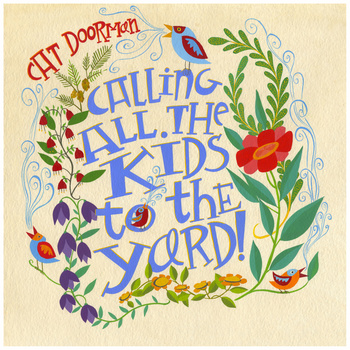
Cat Doorman (aka Julianna Bright) is back with a new EP! Calling All the Kids to the Yard! takes a quick little jaunt through a garden of fresh, rockin’ songs. Making a perfect companion to the ethereal Songbook, Bright’s kindie music debut, Calling All the Kids to the Yard! kicks things up a notch with 4 sprightly tracks eager to make you dance.

One of the many things I admire about Bright’s music is the cohesion between the vocals and instrumentation. Accents such as the piano or hand claps are perfectly timed and in sync with the meter of the song, as well as Bright’s bouncy vocals. There is clearly a lot of thought put into the production of her work!

Each track, infused with beautiful themes such as peace, love, kindness, and wonder, are filtered through inspiring words that are refreshing to hear.

“Drink this cup” picks up where “Peaceful” (from Songbook) left off. “Peaceful” ends with the lyrics “This life we choose, it fills our cup/ This life we choose, it gives so much,and “Drink this Cup” opens with Bright gratefully declaring that it’s time to “Drink this loving cup” and be nourished by the beauty life has to offer. “Wake Up” encourages kids to move through their day with kindness and an open heart while the title track encourages community building and care for the environment. “All the Pretty Little Horses,” is taken from a saunter to a canter as it urges you to “Kick up your hooves” and shake your tail, which you certainly will. Bright’s playful take on this classic showcases her hip style and dynamic range as a musician.

I love Bright’s style and am really enjoying the upbeat swing of this EP. Calling All the Kids to the Yard! is the first in a series of 4 seasonal EPs that are set to release over the course of this year. You can purchase this digital only release through the Bandcamp widget below.


For more Cat Doorman, check out Bright’s recent DJ spot on the Hilltown Family Variety Show, and her interview with the The Oregonian.

Audio Premiere: Jelly Beans! by Mista Cookie Jar and the Chocolate Chips

a1737105967_2

Easter is just around the corner and you know what that means? Jelly beans! Oh man, do I love jelly beans. It’s probably bordering on obsession. If I could have jelly beans for breakfast, lunch and dinner I would! And don’t even get me started on the sneaky and enticing ways Jelly Belly draws you in with their special recipes. But, I’m a grown-up, and I suppose I know better….sometimes.

On the other hand, listening to a song about jelly beans is healthy for everyone, which is why I am very pleased to premiere the latest single by Mista Cookie Jar and the Chocolate Chips.

Rollin’ in with a candy-bluesy-’lectro-pop ’n’ rock anthem, MCJ and his sensational sidekick Miss Ava Flava save you a trip to the candy store with this delicious, sugar-coated jive for your eardrums.

Flavor with a lotta soul.
Nothing like the POW
from some candy coated rock ’n’ roll.

So yummy yumaliscious
in my tummy-tum-tummy.
Kawaii — so cute, 
like a bunny-bun-bunny. 
If jelly beans were canines,
they’d be a pug-puppy. 

‘Nuff said…

“Jelly Beans!” can be purchased through the Bandcamp widget below.

Exploring Kids’ Music Album Art: The Perfect Quirk by Secret Agent 23 Skidoo

IMG_3131

Secret Agent 23 SkidooThe Perfect Quirk

Secret Agent 23 Skidoo’s 2014 Grammy nominated release rode in on the wave of encouraging kids to be themselves. This empowering proposition has been the underpinning of Skidoo’s genesis as a kids’ musician.

Throughout his career, Skidoo has been a staunch advocate of embracing your quirks, standing proud and tall and being who you are. His expressive style of encouraging kids to show their natural, bold colors is complemented well with the tonal choices made by North Carolina-based artist, John Hairston, Jr

Hairston, jr. is a fine art painter who often captures the juxtaposition of beauty and oddity. The images that appear throughout The Perfect Quirk packaging are unique for a kids’ album cover, and together with the music make a cohesive package. Skidoo is a kid hop artist and pays respect to the hip hop genre by including elements such as his graffiti tagged name, and the third eye of the boy on the back cover.

Emily carried this CD around for weeks completely fascinated by the metamorphic characteristics of the kids, especially the boy with the third eye. She was intrigued and wanted to know what the reasoning was behind the choices made for the cover. Seeing the peculiar images piqued her curiosity and imagination over and over again which ultimately enhance her listening experience.

IMG_3129

“The kids and parents all represent a mutation towards higher consciousness. The boy is spiritual, with a 3rd eye representing higher awareness. The girl has antennae, representing alien or intergalactic consciousness. The mother is multi-armed, riffing off Hindu deities and the Dad has angel wings. The race is supposed to be a futuristic mix of all races, when racism has been put down and everybody gets with everybody. The skin color, hairstyle, face and eye shape, etc.” Continue reading

Interview: More Music and Memories with Bob McGrath (“Bob from Sesame Street”) – Part 2 of 2

BobMcGrath

The name Bob McGrath has a very different meaning to me than “Bob from Sesame Street.” I grew up watching Bob and still hold a very special place in my heart for him as someone who regularly made me smile and encouraged me to sing as a child. Bob was the friendly face, the bright smile and comforting voice that always greeted me when I would watch Sesame Street, and then came back into my life when my daughter began watching the show.

I recently had the honor of talking with Bob, which was delightful and nostalgic. I initially expected to talk about the 45 years he’s been on Sesame Street. What I found out was that Bob has had an incredibly prolific career singing and performing with major symphonies around the country.

In our interview, Bob and I discuss his performance for a Japanese Prime Minister, memorable moments from Sesame Street, his daredevil tandem jump out of an airplane at 10,000 feet, and how the show helped strengthen his identity as a father.

With great pleasure, I invite you to get to know a bit more about a true legend, Bob McGrath.

Note: This is part 2 of my interview with Bob. You can read about the first part which covered Christmas music and memories here.


Kids Can Groove: Sesame Street recently celebrated 45 years of being on television. Congratulations! How did you celebrate the 45th anniversary of Sesame Street?

Bob: I feel very fortunate to have been with an incredible show like Sesame Street for 45 years. Loretta Long (as Susan), Caroll Spinney (as Big Bird and Oscar) and I are the three originals still on the show. In the third year, Sonia Manzano as Maria, Emilio Delgado as Luis and and Roscoe Ormann as Gordon also came in. We have all grown together and become like a very close family.

On our 45th anniversary, the cast went out and celebrated with Cookie Monster and the other characters but I was at home working hard to launch my new website. I wanted to post a tandem jump I did up in Canada with the All Veteran’s Parachute Group. We jumped out of an airplane at 10,000 ft, and it was just incredibly exciting. I thought it would be fun for folks to see one of the elder statesman of Sesame Street do something daring like that. My webmaster Tammy, and my daughter Cathlin were helping me get everything up to speed. We finally got my website running fairly late in the day, and then we did a digital toast. So that was our drink for the day.

KCG: Can you describe your favorite moments on Sesame Street?

Bob: Naturally it’s difficult to narrow down 45 years of memories, but my two most favorite specials were “Christmas Eve on Sesame Street,” and the “Goodbye Mr. Hooper” episodes. Both shows were beautifully written, and two of the best things we’ve done in 45 years. We’ve had hundreds of wonderful scenes within shows, but these two episodes are the ones that standout for me.

In “Christmas Eve on Sesame Street,” there was a special part with Will Lee, “Mr. Hooper,” Bert and Ernie. It was a “Gift of the Magi” moment where Bert and Ernie wanted to trade their most prized possessions, so that they could buy something wonderful for each other. In the same special, I had the opportunity to sing a really beautiful song called “Keep Christmas With You,” which was written by Sam Pottle and David Axelrod. There was a really lovely surprise in that particular segment. I was singing and playing the song at the piano while Linda Bove, who was deaf, was in my studio with several children. I stopped playing the piano, and turned around to hear the children singing. To my surprise, I saw that Linda had taught them the whole song in sign language, and they were signing it for me. That was my Christmas present from Linda! It was an extremely beautiful moment, and I liked the song so much that I closed my Christmas Sing-Along album with it. The message in it is wonderful: You can keep the spirit of Christmas all year long, not just on Christmas Eve or Christmas Day.

Goodbye Mr. Hooper” is one that is hard to compare to, though. It gives kids a really good perspective on dying, certainly if they have a parent, grandparent or someone they know and loved who died. Will Lee passed away when Sesame Street was on a break. Jon Stone, a wonderful writer, director, and one of the few original creators that started Sesame Street, had about 3 months to research everything that a child should know on death and dying. Jon worked with our own research team, as well as many top outside children’s specialists during that research period. After all that work, the team ended up producing a beautifully written script. 

On recording day, we rehearsed everything for several hours, totally dry with no emotion, just saying the words. When it was time to “go to tape,” we filmed with full, raw emotions, which were very difficult to contain. We were barely able to keep it together, with tears in our eyes, because we were really reliving Will’s wonderful life on Sesame Street for all of those years. When we finished filming, Jon wanted to redo one little section so we reluctantly said, “Ok,” and got about a 1-2 minutes into the segment before Jon told us to forget it. We couldn’t take it, we were all just breaking up. So what you see in the episode is the first and only take of that whole show. It was very emotional and we all miss Will still to this day very very much.

KCG: That sounds emotional but beautifully authentic which makes the message even more relatable. Did you visit with Will before he died?

Bob: I got lucky and was the last one to see Will in the hospital the night before he died. He had so many tubes in his body so the poor guy was really limited in terms of what he could say and do. I asked the nurse how he was doing, and she said they could not get him to urinate, so I told Will that if he would just try to urinate we would dedicate the next day’s show to him with the letter “P.” Will couldn’t really speak because of the tubes, but he had the biggest smile on his face that he could possibly manage, and was laughing as well as he could. The nurse was just overwhelmed with joy that Mr. Hooper had come around for that short time to have some happy last moments.

KCG: Have you grown close to other cast members whom you spend time with outside of the show?

Bob: Caroll Spinney and I have been extremely good long-term friends because of the many wonderful Big Bird and Oscar pieces we filmed together in early years.

KCG: Was it hard to work with them as muppets on-screen?

Bob: It’s sometimes hard to separate the muppet from the person that’s running it. I always felt that way whenever I was dealing with Oscar in the trashcan. We were sort like Jack Klugman and Tony Randall in “The Odd Couple” with Oscar being the grumpy one and me being “Mr. Nice Guy.”I was a sucker for every one of Oscar’s cheap tricks.

KCG: Can you give us some examples?

Bob: There was one segment called “The Magic Spoon.” I was walking by Oscar’s trashcan and in his nice, high grouchy voice he said “Hey Bob, you wanna see something?” and I happily obliged. Oscar told me that he had a new invention called “the magic spoon.” I asked him how it worked, and he handed me a bowl and a spoon. I could see that the spoon was attached to something, and Oscar said, “You don’t even have to work at all, just put the spoon there and it will feed you without you lifting a finger.” So the spoon dips into the bowl and comes up to my mouth. I tasted the food and told Oscar it was delicious. Oscar encouraged me to have some more, so I took some more and of course it was only a short time before he started speeding up the motor of the spoon going in and out of the bowl of chocolate. Within a quick moment, it was going feverishly fast and I became totally splattered from head to toe with chocolate syrup. Watching this, Oscar starts chuckling and just said, “Gotcha again, Bob!”

Oscar would also always say things like “High-Tonsils” and call me “Bright Eyes,” which was a nice tender sort of greeting.

KCG: Can you tell us how you got to Sesame Street, Bob?

img022Bob: You know the old joke “How do you get to Carnegie Hall?” Musicians often ask that but it’s not for directions. The answer is practice. If you really practice, maybe 1 out of 10,000 musicians get to perform in Carnegie Hall. So, my variation of that joke is “How did I get to Sesame Street?” I got to Sesame Street by standing in front of Carnegie Hall. As I was waiting for a bus, I bumped into Dave Connell, a fraternity brother of mine from the University of Michigan. Dave had just left the Captain Kangaroo Show, where he was a producer, and joined the Children’s Television Workshop. After he told me about the kids’ show he was working on, he asked if I’d be interested in auditioning for it. I had to take a step back because I had just come off of 9 tours from Japan where I had this incredibly large teenage following. At that time, I had in mind that I would become the next Perry Como or Andy Williams and wanted to acquire a similarly large following in the United States as I had in Japan. So I declined Dave’s offer saying, “Not in the least!”

A couple of months later I got a call from the Workshop asking me to come in and take a look at some of the test pieces they were doing with a guy by the name of Jim Henson, whom I had never heard of before, and some puppets called Muppets. I agreed, and it took me about 2 minutes before realizing that I wanted to do this show more than anything else I could ever think of. I was so overwhelmed by the brilliance of the animation, claymation, early film and test pieces with Jim and Frank Oz, and everything else that was going on in the studio.

The Workshop auditioned many actors and chose a cast of four. We shot five 1 hour pilot shows that were shown all across the country on several closed UHF channels for a week.  The original Gordon did not test out well, and that’s when they brought in Matt Robinson, who had been a writer for the Bill Cosby show. We then taped 130 episodes together. Many of the early shows written by Matt Robinson were wonderful, and really related to our inner city target audience especially the muppet “Roosevelt Franklin.” In the third year, we received feedback from the Latino community, and that’s when Sonia Manzano as Maria came in, followed by Emilio Delgado as Luis.

KCG: So you were an international sensation in Japan. How did you end up there and what did you do while you were over there?

Bob: Mitch Miller invited me to be the featured male soloist, alongside Leslie Uggams, in the 2nd year of the NBC program, Sing Along With Mitch. The show ran about 4 years. At the same time, Japan started airing the show on NHK, one of their major stations. When the show was canceled at NBC in New York the whole gang was invited to do some touring all over Japan. We did about 30 concerts in 30 days. Because NHK had picked up the NBC show unbeknownst to me, I had a tremendous number of fans already in place before we even landed in Tokyo. 

WelcomeBob
Our audience in the United States was between 45-50 years old and up, and we expected the same in Japan. We were a bit startled to discover that every night we had 3,000-5,000 teenagers in the audience which was very amusing because the songs we sang were kind of old-timey songs, nothing hip and current at the moment. Every time I came up to do one of my solos the whole audience was screaming “Bobu…Bobu.” We found out later that there were “Bobu Magulas,” teenage fan clubs, all over Japan which none of us knew existed. After our tour ended, the booker asked if I would like to come back in the Fall and open at the top two night clubs in Tokyo. I asked what they were called and he said, “Latin Quarter and the Copa Cabana (same as in NYC).”

For the next 3 years, I returned to Japan 9 times. I did a ton of recordings, concerts, televisions shows, and even commercials in Japanese. By my second tour, I was doing half my show in English and half in Japanese.

Bamboo

One incredible experience I had was when Japanese Prime Minister Sato invited me to entertain him and two of his guests at a private function. At the time that I received the invitation, I was opening the second half of my show in full Kimono and performing with Minoru Muraoka, who played the shakuhachi, a bamboo flute. The Prime Minister’s daughter was a fan and told her father all about our show which led to our invitation. I was very honored of course, but I always found it humorous that an Illinois country farm boy was singing Japanese folk songs to the Prime Minister of Japan.

Perform-for-Sato

KCG: Were you first introduced to music as a child? 

Bob: I would not be in the music business had it not been for my mother. I had no intention of making this a life career, but I was exposed to music at a very young age by both my mother’s playing and me singing anywhere and everywhere she could have me perform. I grew up living in the country, and would visit with my Grandmother who had 8 children in the family, including my mother. For some reason my grandmother insisted that they all learn a musical instrument of some sort or be involved in music. My mother could play by ear, and read music. In our big farmhouse “parlor” we had an upright piano, and while my mother was playing one day, I walked in and started humming along. She noticed that I was humming in the right key and had me learn the piece she was playing, which was called “In The Good Old Summertime.” I learned it very quickly, and by the time my Dad came in from the field for lunch, I had it memorized and sang it for him. About a month or so later, my mother entered me into a contest at the Roxy Theater’s amateur program. I came in second place, and that is essentially what started my musical career. 

KCG: You mentioned that you had no intention of making music a life-long career. What was the turning point that ultimately led you in that direction? 

Bob: During my senior year of high school there was an amateur music club in my home town of Ottawa which awarded me a one week scholarship to a music camp outside of Chicago. The camp was very well run with faculty from Northwestern Conservatory in Chicago and we did small, light opera type things. The faculty members were complementary about my voice and asked if I ever thought of being in music. I said, “Not, really. Can you make a living at that?” and they said, “Sometimes.” I had originally planned on going to the University of Illinois for engineering because I was really good at math. However, when they asked me about music I thought more about it and asked if they could suggest some programs. One of the schools that was recommended to me was the University of Michigan and it just so happened that my very best friend in life, from 3rd grade all the way through college and into the army and Germany, was going there. So I signed up to go there and getting an education at Michigan was best thing that ever happened to me. Interestingly, I had no difficulty coming from a very small farm town community to a gigantic University. 

KCG: What was your first music related job out of college?

Bob: When I graduated from Michigan in 1954 I was inducted into the army. I spent 2 years in Germany, booking for the 7th Army Symphony in Europe and also performing. I came to New York to get a master’s degree at the Manhattan School of Music between ’56 and ’59, as well as auditioned for a wide variety of opportunities using my musical background. I freelanced with NBC, musical television specials, did late night Rock n’ Roll backgrounds, recorded under Igor Stravinsky, and performed concerts under Pablo Casals and Leonard Bernstein doing symphonic choral work in Carnegie Hall.

KCG: You have produced a number of albums. Did you explore the idea of being a songwriter and writing your own music?

Bob: I’m not really a songwriter. In fact, I never had any great inclination to write. I was strictly a 100% performer. I spent a gazillion hours my whole life attempting to perfect my singing voice and my concert performances. Certainly that’s true with the past 45 years working with over 100 symphony orchestras doing 3 different types of family concerts all over North America. Performing with the orchestras, using 50 or 60 local children in the production, required a tremendous amount of energy and work to perfect those concerts. I enjoyed it so much and was honored to be invited back to several of the same orchestras many times. Specifically, with orchestras like the Albany, Vancouver and NJ symphonies.

When I started on Sesame Street, I thought a little bit about songwriting, but I enjoyed performing the excellent hits that composers Joe Raposo and Jeff Moss were writing for the show. I sang “Sing, Sing a Song” first on the show as an English-Spanish duet with the original Luis, and then The Carpenters picked it up and made it a hit. I did some co-writing with Christian Rex on the album Sing Me A Story. There’s a wonderful song on that album called “Everyone Asked About You.” Christian’s daughter brought a book home from school called “Everyone Asked About You,” which is a lovely story and the inspiration for the song he wrote. It’s a great song done in a South African Pop style, and wonderful for teachers to use in a multi-ethnic cultural lesson because it’s about every kind of person all around the world. 

KCG: You have also authored books.

Bob: That was very different from songwriting. Some years ago my wife and I wrote a series of books called “Bob’s Books” for Price Stern Sloan. The stories addressed issues that we felt were important for children growing up. One book, titled “Dog Lies,” was about a kid who just told one teeny tiny white lie that just mushroomed and snowballed into situations he couldn’t get out of. So the message was “don’t lie.” Other books we wrote were “I’m a Good Mommy” and “I’m a Good Daddy” which were feel good books about moms and dads and so forth.

Then Barron’s publishing called my manager saying that they would like to have me write a potty book so my wife and I wrote “Uh Oh! Gotta Go!: Potty Tales From Toddlers.” We ended up writing a second one on manners called “Oops! Excuse Me! Please!: And Other Mannerly Tales.” Both have continued to sell well after many years.

KCG: How do you feel being on Sesame Street has influenced or changed you – personally, parentally, professionally? 

Bob: You can’t help but be influenced by all of the wonderful research and good messages that are shown on Sesame Street. Each segment focuses on every phase of a child’s growth, and that has been a big influence on me as a father of 5, and grandfather of 8. When my kids were young it was certainly a challenging learning curve to be a father, as it is for many dads. Understanding how the scripts were written helped me learn how to become more attentive and sensitive to the way a child thinks, and for their potential to learn and grow. I learned how important it is to listen, really listen, carefully to what your children have to say. When my kids were young that meant getting down on the floor to to their level, eyeball to eyeball, and focusing on all the terrific things they had to say.

We’re starting our 46th experimental season of Sesame Street. The word “experimental” is part of the heading for every writer’s notebook when they get it each year because the show is an ongoing experiment every year. I was thinking just a few days ago that when my wife and I celebrate our next wedding anniversary, we will begin our 57th experimental season of being married (laughs). We’ve been so lucky and blessed with a large family. Being a parent, grandparent, and participating in a marriage, is a lifelong experiment just like Sesame Street continues to be. The challenges and celebrations of life keep things fresh and vital. 

KCG: What has been the biggest adjustment for you on Sesame Street as the show has evolved?
Bob: Adjusting to being “Bob on Sesame Street” was pretty unique, as well as the reactions from both children and parents when they have seen me off-screen. One woman tried to explain through her tears that seeing me brought back a flood of so many wonderful memories from her childhood, and how much the show has meant to her over the years.

Also, I was not a professional actor when I was hired for Sesame Street. I was a professional singer my whole life and I was concerned about my acting abilities and working out different scenes sometimes with challenging scripts, depending on the topic. Will Lee had a wonderful career as an actor and teacher in New York and I shared a dressing room with him for the entire time he was alive. Will taught the likes of James Earl Jones, and he was a tremendous help to me. He gave me little short acting lessons while getting into our costumes for the day.

KCG: What have your children thought about your career on Sesame Street?

Bob: My younger children loved watching Sesame Street. One of my fondest memories was when my youngest daughter, Cathlin, was about 3 or 4-years old. I came home from Sesame Street and she was sitting with her back to me on the couch watching the show. I happened to be on TV at the time I walked into the house. I said “Hi, Cat!” and when she heard my voice she looked at me then she looked at the screen, and went back and forth 3 or 4 times doing double takes before she stood up on the back of the couch and just leapt into my arms. With a big smile, she started beating me on my chest and looking at the screen and pointing and saying, “That’s my daddy! That’s my daddy!” I don’t know who she thought I was but that was really a really wonderful moment, I will always cherish.

KCG: Were your children on Sesame Street?

Bob: A few times, but very infrequently. I wanted them to have a realistic idea of what I was doing, which was a lot of work and a long day. My son Robbie was a wonderful guitar and banjo player, and he was on the show one time with a little jug band. The kids loved going in and meeting the cast and some of the muppets they’d always seen, but I didn’t want them to be show biz kids.

KCG: Your grandchildren must also love watching you.

Bob: They do, and it’s a really nice bonus to the job quite frankly.

KCG: Do you have favorite characters or muppets that you identified or felt the most comfortable with?
Bob: Besides Caroll Spinney doing Big Bird and Oscar, I just have a very soft spot in my heart for Grover especially as the waiter with the blue guy, Mr. Johnson. It was such a vulnerable thing when Mr. Johnson would order and then Grover would spill everything on the way out of the kitchen and say in his infectious Grover voice, “Sir, this was the last one, I’m so sorry but it was a wonderful choice.” I think Grover is just really charming, brilliant and lovable.

KCG: I also have a soft spot for Grover, especially Super Grover. He just couldn’t help himself. 

KCG: What was being off-camera like. Any memorable moments you can share? 
Bob: Lang Lang, a world famous pianist was a guest on the show, and in between takes he would just entertain us with extraordinary pieces on the piano that just knocked you over. He would play with incredibly rapid speed.

When Lang Lang was on the show, the writers created a wonderful scene for him where he auditioned for Oscar’s Trash Band dressed as a grouch. I recognized him in the scene and asked him what he was doing on Sesame Street. He said he was auditioning for Oscar’s Trash Band. I turned to Oscar and said “Oscar! That’s Lang Lang! He doesn’t have to audition!” Oscar said gruffly, “I’ll be the judge of that,” and then said “Play somethin’ twinkle fingers.” So Lang Lang played a few extraordinarily beautiful short passages and after each one Oscar said “That’s beautiful!”. When Lang Lang asked Oscar if he made it into the Trash Can Band, Oscar said “No, of course not!” It was because the passages Lang Lang played were beautiful and Oscar hates anything beautiful. In desperation, Lang Lang just went down with both elbows to the keyboard which made this loud noise. Oscar perked up and asked “What was that?!” Lang Lang replied, “nothing,” so Oscar asked him to play it again. After Lang Lang smashed his elbows again, Oscar said, “Yer hired!”

KCG: Do people continue to talk to each other in character off-screen?
Bob: Oh yeah, there are ad-libs that go on all the time. The muppeteers are wonderful at that. They have to work very intensely. First of all, they’re lying on their backs or on their knees, and you’ve got 4-5 people wrapped around each other like a car crash trying to get everyone into the right position together. Being a puppeteer/muppeteer is technically and physically challenging and so every break to clear their heads and unwind they will just start rapping with each other. Some of it is really hilarious.

During a taping session, if someone messes up a line, there will be funny comments going back and forth about it as soon as taping stops. It’s really amazing to watch the muppeteers in action. Actors have to come in with their script totally memorized whereas muppeteers all read off of their scripts, which are taped in various places where they can see them. They’re watching on a small monitor so they can see what they look like on camera and they’re manipulating the muppets sometimes with two people at the same time. It can be extremely challenging both physically and creatively. Playing Big Bird is probably the most challenging because Caroll is inside of this huge costume that he can only work in for so long. His script is taped inside inches away from his eye, and he’s got a little monitor about 1 1/2 inches – 2 inches wide strapped to his chest. Now, how about this? When he wants to go left he has to go right because the optics are reversed.

KCG: How do you think Sesame Street has benefitted it’s audience?

KamiBob: We’re in 120 English speaking countries and have about 60 foreign co-productions. In Africa they have a muppet called Kami who is HIV+, which is pretty startling when you think of it. Kami helps inform millions of African children what they need to know about AIDS, such as the fact that you cannot get it by playing with a child who is HIV+ or your parent(s) who are HIV+. I’ve heard our CEO express in his speeches that when our writers and producers go to foreign/third world countries they’re really on a mission, they’re not just their to hype or pump up a television show. The writers have also written some really beautiful segments for our veterans’ families dealing with the loss of a parent, mother or father, amputees or guys with PTSD and so forth. Sesame Street salutes and supports military families and their children with a bilingual educational outreach initiative that can be found on their website called “Talk, Listen & Connect

I always thought “Bein’ Green” was just a neat little song for a frog until I heard Ray Charles do it on the tonight show many years ago and I just about fell out of bed. I realized that it’s more than just a song for a frog. The message speaks to the meaning of life for all different kinds of people.

KCG: It’s incredible how children can relate to puppets through the power of imagination. I have seen my own daughter communicate with puppets as though they are real, even though she knows they aren’t. Talking with a character helps her communicate and connect with her own emotions. Even as a child, and to a certain extent today, I consider Big Bird a person. 

Bob: Absolutely. When Caroll Spinney puts his Big Bird costume on I can barely imagine him being inside of it. Caroll brings that character to life to such a degree that he is Big Bird, and that’s his persona. That same thing applied to Jim Henson, Frank Oz and with all the people in the neighborhood pieces. You can attribute all that incredible skill and professionalism to Jim Henson who set the bar very very high for all of the muppeteers that have come and gone over the years.

Einstein said even though he has this incredible ability for abstract thought he feels that his imagination is more important than anything he ever had in his life. So he too felt the same way about imagination.
Guest (Re)Post: Vered Benhorin – Using Music to Connect with Your Baby

161x225xVered_MusicWithChild.jpg.pagespeed.ic.y3y3Wej2j5

Vered Benhorin is a musician and music therapist living in Brooklyn. She runs groups with parents and babies on bonding through music. Her album, Good Morning My Love, won the Gold Parents’ Choice Award and the Gold NAPPA award. Vered’s biggest inspiration and fellow songwriters are her two sons, ages 4 and 1. Learn more about Vered at Baby In Tune.

Below Vered shares inspiration and experiences that contribute to her art. You will also find some excellent techniques which you can easily put into play. As you follow these steps, while listening to Vered’s beautiful voice, you will immediately feel and see how it fosters a tender loving bond between you and your little bundle of joy.


Some people feel completely comfortable singing with their babies from day one. I wasn’t one of those people. I remember watching my husband sing tenderly to our first son while cradling him in the middle of the night. It was the idyllic picture I had always imagined I would make with my baby.

As a musician and music therapist, I was sure singing with my son would come naturally. Instead, I found myself constantly nursing, pumping and bottle feeding. I was sleep deprived, in shock and uncomfortable. It took me quite a while to let music seep into my routine with my baby, but when it did, it felt like the sun had finally shone through the clouds.

baby1I realized that when I sang with my son, when we danced and made music together, I felt particularly connected with him. He often smiled at the sound of a song, which in turn made me want to sing more. Eventually, Icombined my professional training and my experience as a parent and began leading groups to help other parents and their babies connect through music.

Here are some of the tips that I have found to be especially helpful to parents who would like to incorporate music but don’t know how or why. Some, like me, just need a little reminder about the power of music and a little nudge to help the inner music flow out.

1. Use music to establish your daily routine.
Typically, the toughest challenge for the parents in my groups is creating a routine for their babies. During these rough patches, it is helpful to keep in mind that babies are much like dogs; they are trainable and crave routine. Similar to Pavlov’s dogs, babies respond well to having cues, especially auditory ones, that signal the next event. Try singing or putting on a song to let your baby know that it is morning, bath time, nap time or bedtime. If you are consistent with your use of these songs, your baby will come to associate a song with the action that follows and will be more prepared for the next step in the daily routine. For example, you may find that eventually your baby will start to rub her eyes at the first sound of the familiar lullaby.

2. Repeat! Repeat!
I am sure you have already heard that consistency with your baby is key to giving him a sense of security. Singing is an effective way to use repetition because songs organize words and melody in a way that is easily replicated and familiar. This is different from talking, which also involves song-like inflections but usually does not use the same type of repetition. If you sing the same songs over and over with your baby each day, you will probably start to see delight in his or her eyes at the start of these songs. In the baby’s world where everything is new, a well-known song sung by a caretaker gives a sense of control and familiarity.

3. Rhythm is your friend.
Babies love rhythm. From the womb they have been moving around to the rhythm of their mother’s steps and hearing her heart beat. Rhythm is a great tool to use for play, and even more so, for soothing. You may have had nights of trying to soothe your baby back to sleep by rocking in the rocking chair, bouncing on the ball or bouncing the baby in your arms. Adding music to the rhythm of your rocking or bouncing will not only lull your baby to sleep more quickly but also will make this process much more interesting for you. Imagine it: You are bouncing, hoping the baby will fall asleep soon and thinking about the sleep you would rather be having. If you add in a song and move to the rhythm, you are not only distracting yourself from these thoughts, but you also may even enjoy these moments with your baby. More important, you will be increasing your stamina for rocking, and by the time you have sung the song twice, your baby might be asleep.

4. Incorporate music with hand gestures and body movements.
There is a reason that songs such as the “Itsy Bitsy Spider” are timeless hits. For babies, the hand gestures that accompany these songs are like puppet shows. Babies begin to associate gestures with the melody and anticipate them. Try incorporating singing, movement and touch when playing with your baby. You will notice your baby’s delight at being moved around.

5. Why say it when you can sing it?
Babies have been shown to respond more to the sound of their mother singing than to the sound of her talking. Although researchers are not sure why, they speculate that it may be because singing carries more emotion. Most of us have heard that it is important to talk to babies throughout the day to help them build their language skills. Although you might feel awkward narrating your every move, you might find creating simple songs about what you’re doing to be more enjoyable for both you and your baby. It doesn’t take much thought to begin improvising; just be goofy and sing what comes to the top of your head. If you find that you’re having a hard time opening the musical floodgates, find a music group for you and your baby. Perhaps all you need is a little coaxing.

The most important point is that your baby does not care if you can’t carry a tune. He or she just wants to sing with you, smile, have fun,feel that you are enjoying yourself, too, and feel secure. Just like the baby pictures that your baby will go back to as a grown-up, your baby will also remember the songs that you sang together because they will have had a joyous, bonding and soothing effect. And most likely, someday your baby will sing these songs to his or her baby as well.

Music + Art: Edie Carey and Sarah Sample – ‘Til The Morning: Lullabies and Songs of Comfort

a0131620094_10

Edie Carey & Sarah Sample – Til’ The Morning: Lullabies & Songs of Comfort.

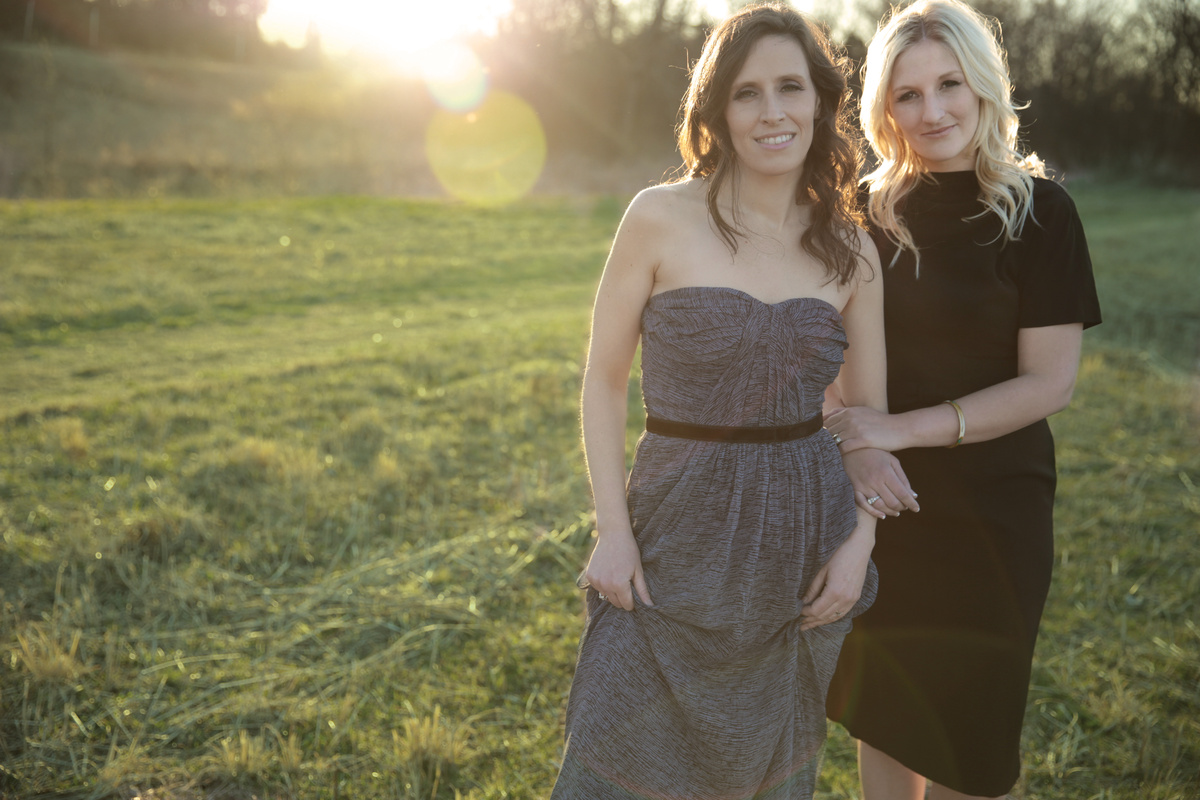
Edie Carey & Sarah Sample join forces to bring this gorgeous lullaby album to life. Their hauntingly beautiful harmonies create a soothing atmosphere for new parents and their little ones. The duo’s hushed lullabies are full of emotion that will swell your heart. Each song delivers a special kind of comfort and poignancy that matches the deeply tender expression between the maternal figure and her infant.

The alluring illustration was done by Caitlin Connolly, a Utah-based artist who explores the human experience, with an emphasis on women in different life phases. In this piece, Connolly exhibits thoughtful detail and subtle textures using curves and lines that, together, create an intimate scene and an intensity that is palpable.

In her personal statement, Connolly expresses:

“My work often explores the feminine experience as I attempt to understand myself and all women more fully and view them the way I see them – powerful yet flawed.”

When I first saw the album art, I was flooded with memories, recalling the potent range of emotions I felt as a new mother. However, after hearing Carey and Sample share their raw, personal experiences, I was compelled to look even further at Connolly’s design.

Sample explains,

“I have known Caitlin Connolly for many years and watched her art and drawings evolve over time. She seems to have settled into her artistry in a deep and beautiful way, often drawing women and life phases they are in. I had seen one of her drawings entitled “A Piece of Me” and was immediately struck by the beauty of the image of mother and baby.

The mother in the drawing is wearing a dress that is fractured into many small pieces. The baby is wrapped in her dress, and the mother is tenderly looking down into the face of her child. I identified with the mother in the drawing. I was living in Seattle when I had my first child six years ago, and the transition required to become a parent was rough to say the least. I was enamored with my beautiful baby, and yet I felt like I was falling apart at the same time. Caitlin’s image perfectly captured the fracturing I felt in my own life as a mother, and yet at the same time showed a mother’s love.’

0002617043_10

Photograph by Ryan Tanner

Carey continues,

“When Sarah showed me Caitlin’s incredible work, I was immediately taken with it, and it just felt like the perfect image for the soothing, healing, intimate feeling of the record. The mother’s fractured dress spoke to me as it did Sarah of all the difficulty of breaking down the “you” you once were to remake yourself into a mother. It also reminded me of the struggle my husband and I went through to become parents. Infertility has been – and continues to be – the most difficult experience I’ve ever had – and while it brought with it feelings of being broken, it also has made me more grateful than I might have been otherwise to finally have gotten the chance to be a mother – and all the beauty and struggle that comes with that privilege. Caitlin seems to just understand and convey all the complexity of those feelings in her work.


To read other posts related to the exploration kids’ album art, read the feature on Secret Agent 23 Skidoo’s Grammy nominated album The Perfect Quirk.